Noah Feldman Quotes
Iraqi national identity under Saddam Hussein never truly incorporated Shiites or Kurds. Sunnis, who identified most closely with the Iraqi nation, remain in some ways disenfranchised relative to the other groups, or at least they perceive themselves that way.
Feldman, Noah. What We Owe Iraq: War and the Ethics of Nation Building. Princeton University Press, 2004.


What makes the situation even more complicated is that most of the land of the Middle East has been governed by a succession of Empires who may have drawn the lines differently from the previous governing dynasty. For example, the land that is Israel today, has been governed by Egyptians, Greeks, Jews, Romans, various Arab dynasties, Turkey, England, and the Jews again. Turkey governed it for the longest period.

This has been a classic dilemma for all large multi ethnic states—trying to develop a sense of unity of citizenship in the face of populations who think of themselves foremost differently. Attempts like this of banning the names of the peoples from official use, banning languages, changing people’s names, requiring common dress and other such methods have failed in most cases (Ataturk’s Turkey being the notable exception). America, Great Britain and the Soviet Union showed the world that it was possible to have a strong sense of national unity and at the same time allow peoples, cultures, and ethnicities to maintain their own ethnic identities. However, many modern governments see their situation as so unique that ethnic repression of one kind or another is required. Modern China, in particular, while not as extreme as Sun Yat-Sen still makes it very difficult for certain cultures to thrive such as the Tibetans. Note that even in the United States we have many who argue that non English language usage should be discouraged and disapprove of the concept of hyphenated Americans. For example, see Theodore Roosevelt {631377}.


He was a brutal, sadistic war criminal who was assassinated by one of his many enemies in 2000 before he could be brought to trial. This statement was typical of his outlook and behavior. He tortured and murdered Croation and Muslim prisoners. His reference to the “slaughterhouse” was to the Second World War in which the Croats were allies of Nazi Germany and created their own concentration and extermination camps where hundreds of thousands of Serbs were murdered. In the eternal memory of the cycle of revenge in the Balkans, Arkan, tried to retaliate against the Croats who had never been called to account for their crimes and even the leadership of Croatia after the Camp David accords celebrated the Fascist times when they were dominant and were able to settle accounts with the Serbs.
Whenever different ethnicities perceive that they are in a “zero sum game” situation where one group cannot benefit without detriment to others, the situation is always unstable and usually explodes as when Yugoslavia broke apart at the end of the 20th century after being held together by a strong leader, Tito. Note that there was a different spelling of Yugoslavia in the 1920s. The pronunciation was the same.
When the former Soviet republics were in the Soviet Union, ethnic Russians were often against their will forced to the Republic so it can be Russified. These ethnic Russians had higher status with the Soviet government and the local people resented them for that and for trying to change their culture. With the breakup of the Soviet Union, many people took out their resentment on the ethnic Russians by various form of official and unofficial discrimination. For example, in 2014 when the Ukrainians revolted and ousted the pro-Russian President, the new legislature, as one of its first acts, banned the use of the Russian language on schools and in all official government forms and activities. Although the new President vetoed the ban and it never became law, the vast majority of the legislators would gladly discriminate against the ethnic Russians legally as well as socially and personally. The Russian government, decided to be the “protectors” of the ethnic Russians. This conveniently also gave them a “justification” of seizing and annexing the Crimea which had been part of Ukraine.


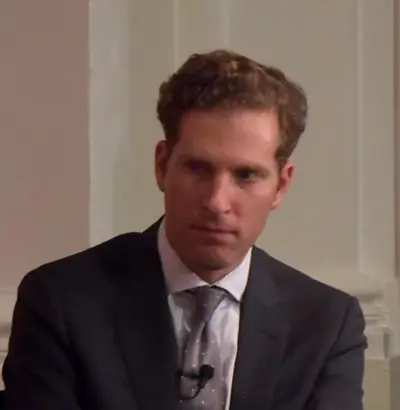
Noah R. Feldman is an American academic, author, columnist, public intellectual, and host of the podcast Deep Background. He is the Felix Frankfurter Professor of Law at Harvard Law School and chairman of the Society of Fellows at Harvard University. His work is devoted to constitutional law, with an emphasis on free speech, law & religion, and the history of constitutional ideas.
