Amartya Sen Quotes
It was incredible to me that members of one community could kill members of another not for anything personal that they did but simply based on their identity.
Sen, Amartya. Identity and Violence: The Illusion of Destiny. W. W. Norton & Company, 2006.


Armenian dissidents in Turkey formed military units like Hinchak which during the First World War, attacked unarmed Turkish Muslim Villages behind the front lines. The object of the Armenians was to have turkey lose the war and obtain their own ethnic state afterwards. The atrocities committed by the Armenians were unfortunately matched by the Turks in what is now referred to as the “Armenian Genocide”. The hatred still prevails – see {588211}.


The Alawites, always a Muslim minority in Syria, have been hated, distrusted, discriminated against, and physically persecuted by the majority Sunni Muslims as long as they have existed. When in Syria, the Alawites, although a minority, gained political control of the country and for the first time were secure in their own country. In the early 2000s, the Sunni majority tried to oust the Alawite leadership, but the Assad government put down the protests brutally. Most Western observers did not know of the anti-Alawite history of persecution in Syria. Returning to that position of victimization was so feared by the Alawites that they fought tooth and nail, murdering many civilians, to be sure that the historical position of the Alawites would not occur again. This makes talks and negotiations over the Syrian Civil War so difficult. The Alawites believe that if they do not control the nation, they will be massacred by the majority. The Christians and the Jews also believe that if the Sunni’s get control, their communities will be in great danger. Complicating the situation even further, is that fact that of the insurgent Sunni groups, the tolerant secular ones who started the revolution are no longer in control of the insurgents. De facto dominance has passed to the Jihadist, Islamic extremists who hold the view expressed by this quotation.


The throwing of flaming torches to burn out members of the other religion got out of control and the fires spread to the homes of all residents. The fires were so prevalent that the riot was then and has since been referred to as the "Shahalmi Gate Blaze". At the time Jinnah was horrified at the violence, but by the following year he and other Muslim League leaders were aiding and abetting Muslim terrorist attacks to put pressure on the government to create a separate Muslim state upon Indian independence—Pakistan. Most historians agree that the Muslim terrorism in the short run had worked, as it would have been unlikely that India would have been partitioned in the absence of violence. However, it set in motion a cultural pattern of religious hate, bigotry, intolerance, violence and murder which would plague Pakistan thereafter. The politicians throughout the country's history have tried to use the Muslim religious, fundamentalist, extremists for their purposes only to find that the fanatics were out of control and the entire Pakistani population has lived in fear, lest an extremist decide that what they did or say was inimical to Islam and assassinate him or her. They have assassinated even the highest levels of politicians—President, Governors of Provinces, National Legislatures as well as Journalists, writers and academics. But the average Pakistani citizen has always been at risk of brutal murder with hundreds killed every year in an atmosphere of total impunity for the murderers. They have even murdered married women who had been raped on the grounds that they were adulterers and were therefore stoned.

The reconstruction to which he referred was the rebuilding of Germany after the First World War. Anti-Semitism distracted most of the people from focusing on the terrible policies that guided Germany into WWI and the incompetent government that was operational.
Mehmet Talaat Pasha. This incredible quotation not only proves Talaat and the Young Turk Government was driving the extermination policy, but also admits that complete genocide was the policy. Talaat’s bizarre logic was this: We have killed so many Armenians that any remaining will certainly want revenge. Therefore, we have to exterminate them all lest they attempt to obtain justice at the expense of the Turks or even exact revenge against the Turks. The U. S. Ambassador was horrified at the Armenian genocide, and was constantly arguing with the Turkish officials to get them to modify their murderous policies. The Christian Armenians, a minority in Turkey and its lands, were discriminated against like other non Muslim minorities in the Ottoman Empire. But during the Turkish War with Russia and WWI, some Armenians defected and served on the Russian side. Many Turkish citizens took revenge on Armenians by means of murder and torture. Soon, the extermination of the Armenians became the official “Young Turk” government policy. Hundreds of thousands of Armenians were killed outright, and about an equal number were “deported” to special areas. Many died of malnutrition along the forced march of Ethnic Cleansing. Others were murdered as they were deported. No one knows exactly how many Armenians were killed with estimates ranging from ½ million to 4 million. This was the first genocide of the 20th century. Modern Turkish leaders however, are in denial about the Armenian deaths. They claim that there was a war and food was scarce; the only Armenians killed, the claimed were proven Russian agents. They further claim that the Armenian behavior was in large part responsible for the forced deportations because of their lack of patriotism and unwillingness to help the Turkish authorities identify the Russian agents. Most Turks today are unaware of the Armenian Genocide as nothing is taught about the massacres in schools or other institutions. It is against the law in Turkey to even have an intellectual study of the Turkish behavior towards the Armenians, much less publish anything about it.

Sarajevo had been one of the most ethnically integrated cities in the Balkans where Serbs, Croats, and Muslims had been at war with each other throughout the former Yugoslavia.


The German catastrophic classification of people as superior and inferior did not start with the Nazis. It had been part of the German culture. What many feel makes Bismarck more cold-blooded than most Germans is that the latter were led to a hatred of the other ethnicities and would exterminate them for that reason, but Bismark had sympathy for the Poles yet advocated genocide simply on practical grounds. The analogy with the wolf shows this mentality at its worst.


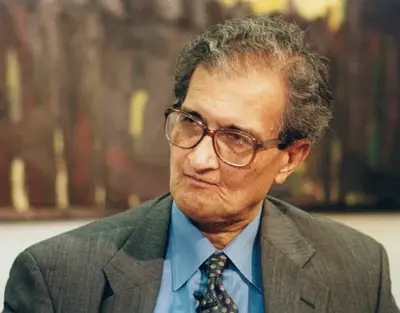
Amartya Kumar Sen CH is an Indian economist and philosopher, who since 1972 has taught and worked in the United Kingdom and the United States. Sen has made contributions to welfare economics, social choice theory, economic and social justice, economic theories of famines, decision theory, development economics, public health, and measures of well-being of countries.
