Milan Kovacevic Quotes
These are not concentration camps, but transient centers …. You are witnessing a great moment in the history of the Serbian nation.
Milan Kovacevic, Serbian Official and War Criminal, Statement to reporters going to view the notorious Omarska Concentration Camp in Prijedor, Bosnia, August 1992
Sourced by: Eigen's Political and Historical Quotations


Mehmet Talaat Pasha. This document is one of the coldest writing in the history of humanity. In modern times, only the German Nazis would exceed this evil in brazen purpose. The Christian Armenians, a minority in Turkey and its lands, were discriminated against like other non Muslim minorities in the Ottoman Empire. But during the Turkish War with Russia and WWI, some Armenians defected and served on the Russian side. Many Turkish citizens took revenge on Armenians by means of murder and torture. Soon, the extermination of the Armenians became the official “Young Turk” government policy. Hundreds of thousands of Armenians were killed outright, and about an equal number were “deported” to special areas. Many died of malnutrition along the forced march of Ethnic Cleansing. Others were murdered as they were deported. No one knows exactly how many Armenians were killed with estimates ranging from ½ million to 4 million. This was the first genocide of the 20th century. Modern Turkish leaders however, are in denial about the Armenian deaths. They claim that there was a war and food was scarce; the only Armenians killed, the claimed were proven Russian agents. They further claim that the Armenian behavior was in large part responsible for the forced deportations because of their lack of patriotism and unwillingness to help the Turkish authorities identify the Russian agents. Most Turks today are unaware of the Armenian Genocide as nothing is taught about the massacres in schools or other institutions. It is against the law in Turkey to even have an intellectual study of the Turkish behavior towards the Armenians, much less publish anything about it.


The German Generals talked him out of the idea, but the quotation gives an insight into the Character of the German Leader. It never occurred to him that the Russians might retaliate and murder German prisoners.


The "trouble" was the terrorist attacks to gain an independent Pakistan that the Punjab Muslims were perpetrating against the Sikhs and the Hindus and the retaliations. At first organized in the cities they had become spontaneous and spread to the countryside. It turned out to be impossible for Governor Jenkins and the limited British troops and police to stop the violence in most places. By the end of the Partition of India hundreds of thousands of Punjabis had been killed.

He was a brutal, sadistic war criminal who was assassinated by one of his many enemies in 2000 before he could be brought to trial. This statement was typical of his outlook and behavior. He tortured and murdered Croation and Muslim prisoners. His reference to the “slaughterhouse” was to the Second World War in which the Croats were allies of Nazi Germany and created their own concentration and extermination camps where hundreds of thousands of Serbs were murdered. In the eternal memory of the cycle of revenge in the Balkans, Arkan, tried to retaliate against the Croats who had never been called to account for their crimes and even the leadership of Croatia after the Camp David accords celebrated the Fascist times when they were dominant and were able to settle accounts with the Serbs.
He was a brutal, sadistic war criminal who was assassinated by one of his many enemies in 2000 before he could be brought to trial.


The two groups of Christian minorities in Turkey then were the Greeks and the Armenians. The discrimination against those minorities had been so great that many sought independence for their areas and accepted and gave assistance to Russia and other “enemies” of Turkey. The Turks, instead of distinguishing between those who aided the enemy and those that did not, assumed that all Armenians and Greeks were guilty and began a program of ethnic cleansing and organized murder of the Christians—the Armenians in particular. Unlike Germany, which accepted its guilt for the Holocaust and organized their society to prevent anything like that from ever happening again, the Turks deny the Armenian Genocide and despite clear historical evidence to the contrary, claim that the Armenian deaths were “collateral damage” resulting from the war. This quotation is poignant in that by the time, the Western powers seriously challenged the Armenian genocide, most of the Armenians had been exterminated as Talat admitted.
Greece had always coveted Anatolia which was a part of the Ottoman Empire but had been in antiquity a Greek dominated area. Further, people of Greek ethnicity and culture, who hundreds of years ago used to be the vast majority were, after the hundreds of years of Ottoman rule and migration, were then the largest minority in Anatolia. The Turks lost the First World War as a consequence of their allying with Germany, and had been stripped of their vast Arab territories. Also, Turkey had just undergone a revolution and the old order was displaced. Greek Nationalist Prime Minister Venizelos saw this as an opportunity to get back Anatolia and sent a military invasion force to land at Smyrna (Ismir to the Turks), the largest city of Anatolia where despite the Greek minority in all of Anatolia, Greeks were a small majority in Smyrna. The invasion was initially successful but was then repulsed by the Turk revolutionists lead by their great patriot Ataturk who counterattacked and defeated the Greek forces handily despite the fact that they were hastily organized, untrained together, and much more poorly equipped than the Greeks. However, the Greeks in their retreat, followed a scorched earth policy and as this quotation shows, committed many atrocities against the Turkish civilian villages.


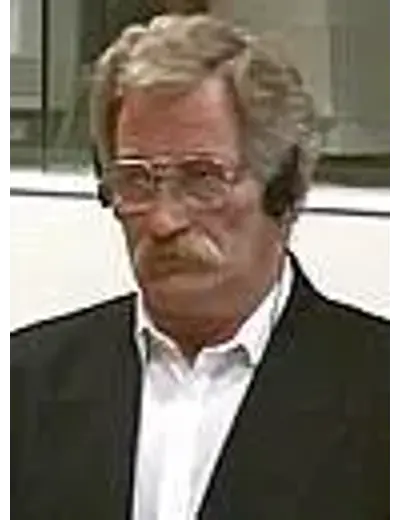
Milan Kovačević, nicknamed Mićo, was the President of the Executive Committee of the Municipal Assembly of Prijedor from January 1991 to March 1993. He also served as the Vice President of the Municipality of Prijedor Crisis Staff after the Crisis Staff took over control of the town of Prijedor in April 1992. He was an anesthesiologist by profession and most recently served as the Director of the Prijedor Medical Center, after his resignation as President of the Executive Committee in March 1993.
