Theodore Roosevelt Quotes
I would rather see this administration turned out for enforcing laws can see a succeed for violating them.
Sunday Excise Laws, sometimes called “Blue Laws”, prohibited commercial activity on Sunday, the day most Christians believe to be the Sabbath. Then such laws had not been constitutionally tested and when the were later were they were all found to be unconstitutional. Some Christian sects believe that Saturday is the Sabbath as do most Jews. Muslims believe Friday is the Sabbath. So any state determination on the Sabbath favors some religious viewpoint and discriminates against others. Today, decisions about Sabbath are left to individual consumers and store owners.
Theodore Roosevelt, 1858-1919, 26th President of the United States (Republican, NY), Statement when as police commissioner of the city of New York he began enforcing the Sunday Blue laws
Sourced by: Eigen's Political and Historical Quotations


In modern times almost all countries have written constitutions. And almost all of those constitutions appear to be democratic. Many have been taken from the United States Constitution. However, most of the countries are not real democracies as they do not enforce their own constitutions. For example, in Egypt, the constitution guarantees women equal rights to men. There are many female attorneys. However, the notion of a female judge is too much for the sexist culture. So regardless of what the constitution says, it is not enforced with respect to female judges. When Smyth gave his lecture, constitutions were just getting popular. He was prescient enough to realize that a constitution to be effective must conform to the belief structure of most of the population and the constitution most be administered as well as written.


Powell was the Secretary of State and Addington kept advising the administration that as long as the President was acting in defense of the country in his capacity as Commander in Chief, he did not have to obey any existing laws that had been Constitutionally passed which in the opinion of the President restricted or limited the President or the executive branch. Addington was an attorney and Assistant to the Vice President, but he was given much responsibility for administration policy. Powell the Secretary of State of the Administration could not have disagreed more and although most politicians including Republicans disagreed with the Addington thesis, Powell was one of the few Republicans to criticize the Addington position.


He was explaining his reasons for resigning in 2005 from the number two position in the Justice Department. The George W. Bush administration had implemented a program of secret wiretapping and surveillance of American citizens in America which required the authorization of the Justice Department which had determined that the program as it was being implemented violated the law. The Attorney General was ill in the hospital but had told Comey that he would not sign the authorization. The White House then pressured Comey to sign and he refused, and in a similar replay of the Watergate “Saturday Night Massacre”, the number three man at Justice would have been ordered to sign. His resignation convinced President Bush to alter the program to take account of the Justice Department objections.


Sunday Excise Laws, sometimes called “Blue Laws”, prohibited commercial activity on Sunday, the day most Christians believe to be the Sabbath. Then such laws had not been constitutionally tested and when the were later were they were all found to be unconstitutional. Some Christian sects believe that Saturday is the Sabbath as do most Jews. Muslims believe Friday is the Sabbath. So any state determination on the Sabbath favors some religious viewpoint and discriminates against others. Today, decisions about Sabbath are left to individual consumers and store owners. Saloon keepers were particularly hard hit if they catered to the working man as in those days people worked a 6 day week and Sunday was the only day that people had leisure time. When TR became Police Commissioner, the law was on the books but rarely enforced as they were unpopular with most of the population—the orthodox Christians excepted. He felt obligated to enforce it even if he thought it too strict himself.


Noting that Congress routinely exempts itself from civil rights, labor and handicapped-access legislation, the Senator introduced an amendment that would apply the provisions of the Americans with Disabilities Act to Congress and its buildings: For another view, see Wendell Ford, above
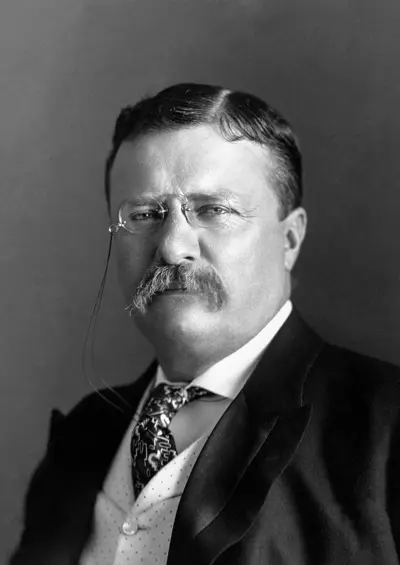
Theodore Roosevelt Jr., often referred to as Teddy or his initials T. R., was an American statesman, conservationist, naturalist, historian, and writer, who served as the 26th president of the United States from 1901 to 1909. He previously served as 33rd governor of New York from 1899 to 1900 and the 25th vice president of the United States from March to September 1901. Roosevelt emerged as a leader of the Republican Party and became a driving force for anti-trust and Progressive policies.
