Theodore Roosevelt Quotes
I have now run up against an ugly snag, the Sunday Excise law. It is altogether too strict but I have no honorable alternative save to enforce it… to the furious rage of the saloon … keepers, and a good many other peoples too for which I am sorry.
Sunday Excise Laws, sometimes called “Blue Laws”, prohibited commercial activity on Sunday, the day most Christians believe to be the Sabbath. Then such laws had not been constitutionally tested and when the were later were they were all found to be unconstitutional. Some Christian sects believe that Saturday is the Sabbath as do most Jews. Muslims believe Friday is the Sabbath. So any state determination on the Sabbath favors some religious viewpoint and discriminates against others. Today, decisions about Sabbath are left to individual consumers and store owners. Saloon keepers were particularly hard hit if they catered to the working man as in those days people worked a 6 day week and Sunday was the only day that people had leisure time. When TR became Police Commissioner, the law was on the books but rarely enforced as they were unpopular with most of the population—the orthodox Christians excepted. He felt obligated to enforce it even if he thought it too strict himself.
Theodore Roosevelt, 1858-1919, 26th President of the United States (Republican, NY), Letter to his daughter Anna when he was police commissioner of the city of New York
Sourced by: Eigen's Political and Historical Quotations

This establishment and enforcement of the Christian Sabbath was really made unconstitutional when the Constitution including the Bill of Rights was adopted in 1789. None the less, many communities in the United States maintained laws and law enforcement regarding the Christian Sabbath (called “Blue Laws”) for years. It was only into the 20th century before the practice died out after a number of cases were declared unconstitutional. Even into the 20th century, there are occasional cases where communities try and use the civil law to enforce their religious beliefs about the Sabbath. There was even a Jewish community in upstate New York which passed laws enforcing the Jewish Sabbath on Saturday. That also was a violation of the First Amendment and thus was unconstitutional.


Sunday Excise Laws, sometimes called “Blue Laws”, prohibited commercial activity on Sunday, the day most Christians believe to be the Sabbath. Then such laws had not been constitutionally tested and when the were later were they were all found to be unconstitutional. Some Christian sects believe that Saturday is the Sabbath as do most Jews. Muslims believe Friday is the Sabbath. So any state determination on the Sabbath favors some religious viewpoint and discriminates against others. Today, decisions about Sabbath are left to individual consumers and store owners.

Suggestions of prohibition of alcohol have been made for a long time in America. It was tried for a few years in he early 20th century. Instead, alcohol is regulated in most parts of America.

The poem was his summary of the Wickersham Commission’s (National Commission on Law Observance and Enforcement) conclusion regarding Prohibition.
The authenticity of this quotation has been in contention for years. While many sources attributed this statement to Lincoln, no one has ever found a document in which it appears. Further, it was so clearly consonant with the anti-Prohibition argument that we suspected it as a “Phantom Quotation” (See http://politicalquotes.org/node/4063). As a result, we did not include this quotation until March of 2014. The reason we changed our mind was a newspaper article that was pointed out to us, and after reading it, we tilted in favor of inclusion. The article is http://druglibrary.org/schaffer/LincolnQuote/lpq0001.jpg


To this day efforts to regulate alcohol, the nation’s most frequent drug of choice and cause of addiction and violence, are met with the same “virtues” of employment and tax revenue. It was not until the 1990s that we learned that the revenue from alcohol taxes was far less than the cost of society coping with the problems of drinking and addiction.


This method of substance abuse prevention represents what scientists now call “environmental prevention” where instead of dealing with individual alcoholics the environment is altered to reduce the likelihood of developing fewer alcohol-related problems. Almost every state uses Locke’s principle and regulates the number of liquor outlets in any most areas. Those communities which have a very high density of bars and liquor stores tend to have more alcohol-related violence. The riots of the Watts area of Los Angeles in the late 20th century took place in one of the highest densities of liguor stores in the country.

i.e. serving no intoxicating beverages at the White House The practice to which he was referring was serving no intoxicating beverages at the White House.

Not all police take bribes from drug dealers and operators but many do. Of the minority who are corrupt, the drug dealers are the source of most of the money.

Father of Harriet Beecher Stowe and Henry Ward Beecher. Father of Harriet Beecher Stowe and Henry Ward Beecher


Samuel Langhorne Clemens, 1835-1910. The Congressmen who voted for Prohibition in the next century had not read or believed this quotation of Twain’s.


With Prohibition, the demand for alcohol was the same as ever, but the supply was restricted. Since much of the alcohol in the south was produced in illegal stills, Prohibition, did not affect the supply from those sources. As a matter of fact history shows that they ramped up production to fill the supply gap that was created by Prohibition. The North had very few illegal stills before Prohibition and there was very little capability to replace the legal sources that Prohibition had curtailed.

He was also a paid lobbyist for the beer industry.
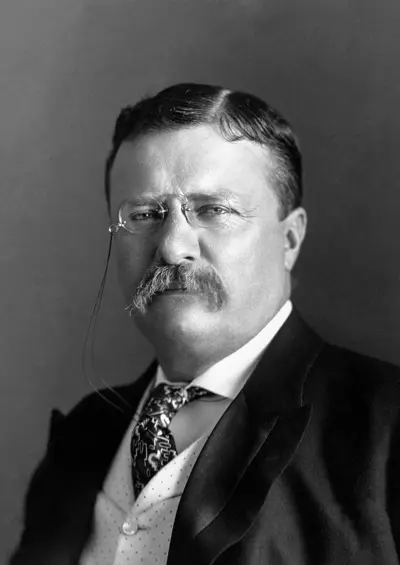
Theodore Roosevelt Jr., often referred to as Teddy or his initials T. R., was an American statesman, conservationist, naturalist, historian, and writer, who served as the 26th president of the United States from 1901 to 1909. He previously served as 33rd governor of New York from 1899 to 1900 and the 25th vice president of the United States from March to September 1901. Roosevelt emerged as a leader of the Republican Party and became a driving force for anti-trust and Progressive policies.
