Potter Stewart Quotes
The right to defy an unconstitutional statute is basic ….
Potter Stewart, 1915-1985, U. S. Supreme Court Justice (Republican), Walker v. Birmingham, 1967
Sourced by: Eigen's Political and Historical Quotations


Many New Yorkers and others felt that since the attack on the World Trade Center was made in the name of Islam, the mosque and commuity center should be built in another location further from Ground Zero. Ellison was debating someone who argued that the Mosque should not be built so that sensitivity can be shown for those New Yorkers who lost relatives and friends in the attack of September 11. Rather than insist on their Constitutional rights, the Muslim leadership of the project, moved the location somewhat further away from Ground Zero.


Note the use of the phrase “against the government.” One of the unique aspects of the American Constitution and The Bill of Rights is that the government is considered a potential and even probable infringer on the liberties of the people. It is almost as though the government was the potential enemy. Modern libertarians state this very explicitly and it is ever present in the views of both the right and left wings of American politics. Most centrists recoil at the thought that some citizens see the government as the enemy, but even in America there have been times where the government has infringed on the rights of citizens only to have the courts or future administrations and Congresses correct the error.


Powell was the Secretary of State and Addington kept advising the administration that as long as the President was acting in defense of the country in his capacity as Commander in Chief, he did not have to obey any existing laws that had been Constitutionally passed which in the opinion of the President restricted or limited the President or the executive branch. Addington was an attorney and Assistant to the Vice President, but he was given much responsibility for administration policy. Powell the Secretary of State of the Administration could not have disagreed more and although most politicians including Republicans disagreed with the Addington thesis, Powell was one of the few Republicans to criticize the Addington position.


Note the use of the phrase “against the government.” One of the unique aspects of the American Constitution and The Bill of Rights is that the government is considered a potential and even probable infringer on the liberties of the people. It is almost as though the government was the potential enemy. Modern libertarians state this very explicitly and it is ever present in the views of both the right and left wings of American politics. Most centrists recoil at the thought that some citizens see the government as the enemy, but even in America there have been times where the government has infringed on the rights of citizens only to have the courts or future administrations and Congresses correct the error.

See {587703} for a similar statement by a Supreme Court Justice.


In 1836 the House of Representatives adopted the so-called "Gag Rule" whereby the house could not act on all further petitions regarding slavery, even though thousands of petitions were being received. Adams was one of the few who protested the Gag Rule:. Adams even submitted petitions with which he did not agree:. Every year Adams attempted to get the Gag Rule repealed. He was even threatened with censure for his efforts, but his status as an ex-president protected him. Finally, in 1844, Adams' perennial resolution carried:


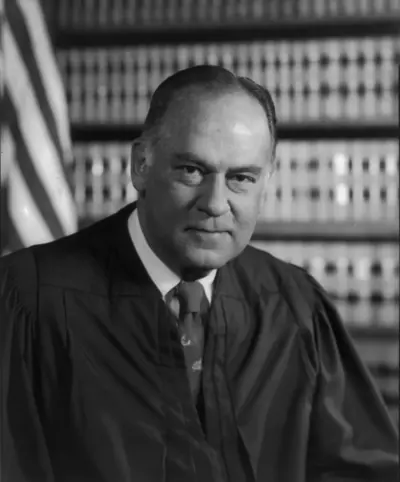
Potter Stewart was an American lawyer and judge who served as an Associate Justice of the United States Supreme Court from 1958 to 1981. During his tenure, he made, among other areas, major contributions to criminal justice reform, civil rights, access to the courts, and Fourth Amendment jurisprudence.
