Dave Brubeck Quotes
I wasn't allowed to play in some universities in the United States and out of twenty-five concerts, twenty-three were canceled unless I would substitute my black bass player for my old white bass player, which I wouldn't do.
Smith, Hedrick, director. Rediscovering Dave Brubeck. PBS, 2001.


Negro volunteers were actually preferred under the theory that their ancestry made them more immune to malaria and other tropical diseases in Cuba.

While the Western nations were doubtless guilty of blatant racism and anti-Asian discrimination, the Japanese protest was tainted with a substantial degree of hypocrisy. At the Versailles Peace Treaty negotiations the Japanese argued strenuously for equal treatment of Japanese by the West but did not favor extension of the equality principle to Koreans, Chinese, Thais, Chomoros, and other Asian peoples. Japan itself, led by its Emperor, considered other Asian people racially and culturally inferior. Thus they were the inherent leaders of Asia and all Asian people.


Reconstruction was the period in the South after the Civil War. The change that emancipation brought to the white South was traumatic, and there was a constant struggle between those who wanted the Blacks to be integrated into Southern Society—and those Southerners who wanted to create a society that would be as close to slavery as possible, So the Klu Klux Klan and other terrorist organizations formed and with lynching and other intimidation, much of the initial progress of Reconstruction was rolled back and did not get reinstated until the Civil Rights and Voting Rights Acts were passed in 1964.


The reason for secession was the threat to slavery, which was a great threat to the slave-owners of the South. However, the non slave-owners had a very strong vested interest in maintaining slavery in that most Southerners had been brought up with such a negative view of Blacks that they were paranoid of Black equality or even worse some Blacks in positions of authority over whites. At the time, it was the Republican Party that was the advocate for minority equality and the Democratic Party embraced the racists. The parties would flip flop after the Civil Rights Act of 1964 ending legal segregation was passed by a Democratic President and a Democratic Majority Congress.

Racism was so rampant in America that even after Blacks had won elections to Congress, they would be discriminated against even in Washington DC.

Justice Marshall, in he early career played an extremely important role in the development of the law vis a vis race and discrimination in America. He went from town to town in the Jim Crow, segregated South filing and often winning civil rights lawsuits. This was an era where lynching was still prevalent, and he was often threatened with bodily harm or death. Justice Ginsberg who also had been a leader in filing and winning civil rights suits but she worked in the area of women’s rights. The host had stated that she and Marshall were the great legal pioneers in civil rights litigation. Ginsberg explained that she hers was a much easier role and Marshall should receive much more credit. This was her reason.

Referring to Montgomery Alabama in 1950.


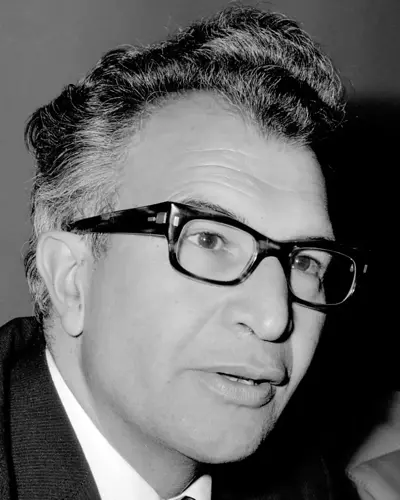
David Warren Brubeck was an American jazz pianist and composer, considered one of the foremost exponents of cool jazz. Many of his compositions have become jazz standards including "In Your Own Sweet Way" and "The Duke". Brubeck's style ranged from refined to bombastic, reflecting both his mother's classical training and his own improvisational skills. His music is known for employing unusual time signatures as well as superimposing contrasting rhythms, meters, and tonalities.
