Kurt Vonnegut Quotes
I was taught in the sixth grade that we had a standing army of just over a hundred thousand men and that the generals had nothing to say about what was done in Washington. I was taught to be proud of that and to pity Europe for having more than a million men under arms and spending all their money on airplanes and tanks. I simply never unlearned junior civics. I still believe in it. I got a very good grade.
Kurt Vonnegut, 1922-2007, Novelist, Quoted by James Lundquist in Kurt Vonnegut, 1971
Sourced by: Eigen's Political and Historical Quotations


This size standing army which alarmed so many at the beginning of the 20th century, looked very small when compared with the standing army of America a century later. For earlier American Politician’s views on a standing army, see {592824}, {631687}, {622888}, and {641008}.


These two states actually prohibited their legislatures from maintaining a standing army. Similar sentiments were in the constitutions or bill of rights of New Hampshire, Delaware, Maryland and Massachusetts but the option was left with the legislatures. A similar phrase appears in the Virginia Bill of Rights of 1776.


This was an official publication of the U. S. Army. The First World War had very little affect on future military preparedness At that time conservatives in Congress were very isolationist and military preparedness was not a high priority or even a significant political issue. The Democrats then were more supportive of military spending than the Republicans. It took World War II, for which America was very unprepared, to produce a change in public and political opinion regarding military preparedness.

Political disputes over the degree of defense spending are classic in American political history. In the early 20th century, most conservatives were opposed to government spending for the military and the President had great difficulty getting the Conservative wing of his own party to support increased military appropriations. The remains of the great naval hero John Paul Jones had just been brought to the United States from France in which he had died. A large ceremony was held in Annapolis, Maryland and most of the conservatives who had opposed the military spending proposed by Roosevelt attended the ceremony to demonstrate their patriotism. TR shocked them by turning the solemn ceremony into a political embarrassment for them.

The French and English, with larger numbers and more experienced troops and officers, wanted the American units to come under the command or their officers and be integrated into the allied army. However Wilson established the tradition that American troops fighting abroad most always fight as an American Army under American Command. Although resented then and into the 21st century by America’s allies who are expected to fight under American command, it is a tradition that no American major politician has seriously challenged since then.

The issue of whether the military has any rights per se in a democracy or is an institution established and controlled by the people is one that separates many countries today. In one philosophy—held by America and most industrial democracies—the military is completely subservient to and under the control of the people and their government. The other view held by many societies controlled by the military is that the military is a subset of the people with specific rights granted to it. In some countries the military can name representatives, can veto legislation and are considered a faction just like political parties. See China, Turkey, Argentina, and Indonesia for examples of the latter view.

Commenting on the hostilities between the Baltic states and the Russian government:


America is almost unique among nations where the military has never been a force that either dominated or controlled the government or acted independently from it. The Founding Fathers knew well the history of Europe and other nations, and built many checks into our Constitution and our traditions with George Washington, setting the example for American military men forever after.
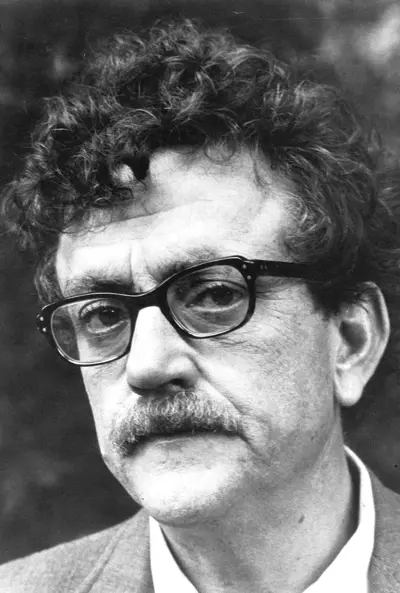
Kurt Vonnegut Jr. was an American writer. In a career spanning over 50 years, he published 14 novels, three short story collections, five plays, and five nonfiction works, with further collections being published after his death.
