Robert Cecil Quotes
I was particularly awkwardly placed, without instructions and not even in close political alliance with the actual British Government.
Viscount Cecil of Chelwood. He did a remarkably good job in drafting the initial covenant of the League of Nations. Many believe that one of the reasons was that he was not encumbered by having specific instructions from his government and by not being very politically involved. And the government, in turn, remarkably did not take control of the process, but saw it as a technical, professional task and left it to Cecil.
Robert Cecil, 1864-1958, Drafter, Covenant of the League of Nations, Nobel Laureate in Peace [England], Delegate to the League of Nations, 1931
Sourced by: Eigen's Political and Historical Quotations


Lodge was particularly concerned that under the proposed treaty the United States would be obligated to support the League of Nations military efforts regardless of American public opinion or Congressional action.

The Japanese diplomats of the day maintained that in addition to the special needs of Japan {616181} and {616183}, the “white” powers had colonies and if they left Korea, white nations would simply come in and annex it as a colony. The Japanese saw this as a double standard—white nations could have colonies but Asian nations, no. In reality, Colonialism was fading even in the white nations but Japan was coming to it anew. Their timing was on the wrong cusp of history. The example of Ireland transformed to an independent republic shortly thereafter. For colonialism, the handwriting was on the wall but the Japanese preferred not to look at the trend but the then status quo.


There were critics of the Treaty of Versailles in Britain as well as the United States.


His dream was for a conference of South and Central American leaders who would meet with other world leaders to maintain peace and eliminate war. This was one of the early visions of a League of Nations or a United Nations.


Because the early nation's government was still in a state of becoming, foreign powers were hesitant to do business and conclude treaties with the newly-formed United States of America:


At the time, Palestine was technically Turkish territory. Turkey was one of the defeated axis powers in World War I. England, as part of the World War I peace treaties, had control over Palestine as well as most of the rest of the Middle East.

and later wife. Stevenson is describing the German foreign minister’s behavior at Versailles and Lloyd George’s angry reaction.


The notion of Executive Privilege developed over the years. Our first President thought nothing of giving the Senate access to all the papers and records regarding the negotiations of the treaty with Great Britain.

The Spanish had been beaten and bloodied by England, but no one else until Napoleon would come along later. So it was easy for Spain to bully and dominate the non-English countries.

In the history of diplomacy and peace treaty negotiations, the various national representative would meet in secret, negotiate treaties and add secret clauses. Then the treaty was finally made public for approbal or ratification in the different countries no one would be told of the secret clauses. Each side would have a written secret copy of these clauses, but the publics of the country would never know. For example, the agreements about various WWII issues that were secret have not yet been made public in the United States or England. Wilson wanted to put an end to that diplomatic ploy and wanted all the peace treaty clauses to be public with nothing secret. He also wanted the deliberations to made in public woth press access. He had little support for the idea in most European nations.
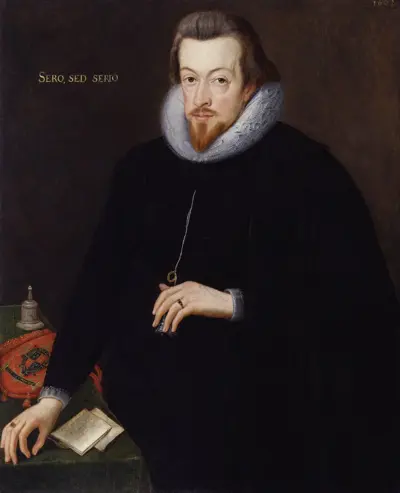
Robert Cecil, 1st Earl of Salisbury, KG, PC was an English statesman noted for his direction of the government during the Union of the Crowns, as Tudor England gave way to Stuart rule (1603). Salisbury served as the Secretary of State of England (1596–1612) and Lord High Treasurer (1608–1612), succeeding his father as Queen Elizabeth I's Lord Privy Seal and remaining in power during the first nine years of King James I's reign until his own death.
