Hubert de la Poer Gough Quotes
It seems to me that the Peace Treaty can be viewed from two points of view, the moral and the purely utilitarian. From either it appears thoroughly bad, and it has failed and must continue to fail to reach any good result, such as all who fought in the war supposed we were to gain. We hoped to establish justice, fair-dealing between nations, and the honest keeping of promises; we thought to establish a good and lasting peace which would, of necessity, have been established on good will. The Peace Treaty has done nothing of the kind.
There were critics of the Treaty of Versailles in Britain as well as the United States.
Hubert de la Poer Gough, 1870–1963, British General & Army Commander, Criticism of the WWI Peace Treaty of Versailles, Speech, Union of Democratic Control, November 11, 1920
Sourced by: Eigen's Political and Historical Quotations

In the history of diplomacy and peace treaty negotiations, the various national representative would meet in secret, negotiate treaties and add secret clauses. Then the treaty was finally made public for approbal or ratification in the different countries no one would be told of the secret clauses. Each side would have a written secret copy of these clauses, but the publics of the country would never know. For example, the agreements about various WWII issues that were secret have not yet been made public in the United States or England. Wilson wanted to put an end to that diplomatic ploy and wanted all the peace treaty clauses to be public with nothing secret. He also wanted the deliberations to made in public woth press access. He had little support for the idea in most European nations.

He was exactly right. Two decades later Germany had started WWII.


At the time, Palestine was technically Turkish territory. Turkey was one of the defeated axis powers in World War I. England, as part of the World War I peace treaties, had control over Palestine as well as most of the rest of the Middle East.


Vladimir Lenin


The “proofs” were diplomatic assurances—treaties—that England would guarantee the territorial integrity of Belgium. The British made strong diplomatic efforts to persuade Germany not to occupy Belgium. The German’s none the less send armies in under the excuse that if they did not, the French would occupy the country and have a strategic advantage over them. Diplomacy could do no more good. England had to send troops or renege on its obligations. So England was in WWI.


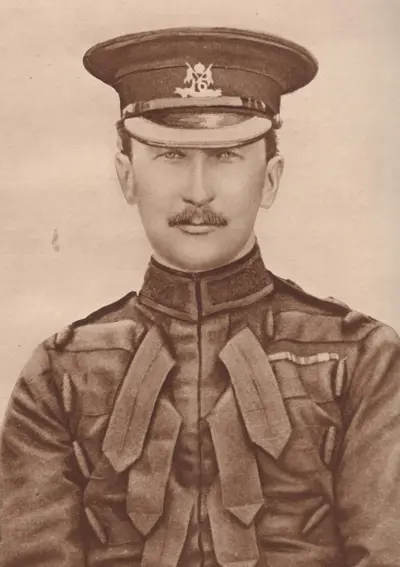
General Sir Hubert de la Poer Gough GCB, GCMG, KCVO was a senior officer in the British Army in the First World War. A favourite of the British Commander-in-Chief, Field Marshal Sir Douglas Haig, he experienced a meteoric rise through the ranks during the war and commanded the British Fifth Army from 1916 to 1918.
