Joint Committee on Reconstruction Quotes
I. That the States lately in rebellion were, at the close of the war, disorganized communities, without civil government, and without constitutions or other forms, by virtue of which political relations could legally exist between them and the federal government. II. That Congress cannot be expected to recognize as valid the election of representatives from disorganized communities, which, from the very nature of the case, were unable to present their claim to representation under those established and recognized rules, the observance of which has been hitherto required. III. That Congress would not be justified in admitting such communities to a participation in the government of the country without first providing such constitutional or other guarantees as will tend to secure the civil rights of all citizens of the republic; a just equality of representation; protection against claims founded in rebellion and crime; a temporary restoration of the right of suffrage to those who had not actively participated in the efforts to destroy the Union and overthrow the government, and the exclusion from positions of public trust of, at least, a portion of those whose crimes have proved them to be enemies to the Union, and unworthy of public confidence.
Committee of the Congress
Joint Committee on Reconstruction, Report, June 20, 1866
Sourced by: Eigen's Political and Historical Quotations


Committee of the Congress. This was the prevailing Congressional and public view except for the South which had coalesced around an intellectual rationalization. See {618013}.


Wade was one of the Radical Republicans who advocated a much more vigorous prosecution of the Civil War effort in the North. It is important for two reasons: First, it illustrates the position of the “Hawks” who constantly pressured Lincoln to counter the Democrat lack of enthusiasm for the fighting. Many believed that the South would come to its senses and end the rebellion. Second and more important, this is one of the quotations that apologists for the South during the Jim Crow segregation issue use to show that there was a strong desire to impoverish the South. This is partly true. Wade and the other radicals did argue to impoverish the South only so long as they were continuing the war and rebellion. They did not argue that the South should be impoverished after the war was over. However, the reality was that the Southern economy had become so dependent on slave labor, that after Emancipation, it was very difficult to rebuild the Southern Economy. With Slavery Southern Cotton sold to England was cheaper than Egyptian Cotton. If labor had to be paid, the Egyptian cotton became cheaper. The South had squandered almost all of their capital resources on financing the war and had no capital to finance modern manufacturing enterprises. And they so resented Northerners that it was very difficult for Northern businessmen who did have capital to start and finance enterprises in the South. There also was little money for good public schools after the war, and the inferior education of the South made the situation very hard to change.

His predictions regarding the termination of Reconstruction were tragically prescient.


Grant was a new Brigadier General and occupied Paducah


14 years after this statesmanlike speech, Davis flip flopped on this principle and became a firebrand and agitator and hawk for secession and war. It was the Southern upper class that controlled the politics of the South and were the ones who would suffer the greatest economic loss if the Union had continued in the direction of refusing to return runaway slaves and other abolitionist activity. Although many Southerners volunteered to fight for the confederacy, there were not enough and Davis, who in earlier years would not war unless there was genuine demand of the people, for the Civil War, the South had to resort to conscription. The North did as well.


He was a realist who foresaw that even though the South had been militarily defeated, there were those who would persist in their efforts to retain slavery or a de facto form where freedom is the form but subjugation was the substance. It would be Jim Crowe and terrorism in the form of the KKK and a successor to Lincoln who was very sympathetic to the aims and culture of the Southern Rebels.

The Governor was a staunch Confederate supporter but his state legislature majority favored the Union. He was forced out of the governorship when the 1861 election gave the legislature a veto-proof pro Union majority.


There was some political pressure in the North, to offer terms to the South where they could cease the rebellion and return to the Union and return to the status quo ante—before the rebellion.
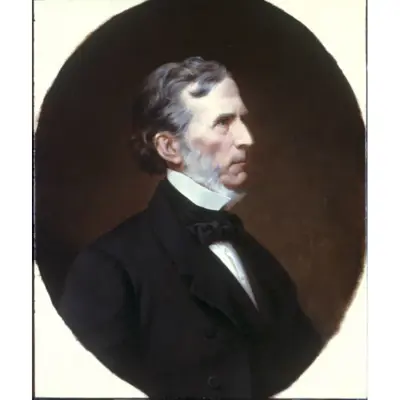
The Joint Committee on Reconstruction, also known as the Joint Committee of Fifteen, was a joint committee of the 39th United States Congress that played a major role in Reconstruction in the wake of the American Civil War. It was created to "inquire into the condition of the States which formed the so-called Confederate States of America, and report whether they, or any of them, are entitled to be represented in either house of Congress.”
