Owen Wister Quotes
I reckon some parsons have a right to tell yu' to be good. The bishop of this hyeh Territory has a right. But I'll tell yu' this: a middlin' doctor is a pore thing, and a middlin' lawyer is a pore thing; but keep me from a middlin' man of God.
Wister, Owen. The Virginian: A Horseman of the Plains. The Macmillan Company, 1902.


His response was to being asked whether he could do something with Russian Catholics to help Laval win favor with the Pope, to counter the increasing threat of Nazism. This quotation is often used as an example of Stalin’s disrespect for the Papacy. However, in this case, the Pope was extremely weak politically and some argue spiritually for he did not oppose Hitler and the Nazis very much. Defenders of the Papacy argue that Hitler had overwhelming force and little respect for the Pope, and ironically this was what Stain was referring to. Ironically, another Pope, John Paul, had a major part in bring down the Soviet Union and he had no divisions.

What Alcuin did not say was that Charlemagne had the largest and most powerful army.

England had, under Henry VIII, left the Roman Catholic Church where the King replaced the Pope as head of the English Church. Henry’s successors then had to organize and manage the national Christian church. James was discussing the hierarchy of the Church of England and there was a suggestion that Bishops be eliminated and have every priest directly responsible to the crown. Bishops would be powerful figures who might form a power center. (They did later). However, King James I observed that the King is God’s choice and rules by divine right. So there had to be bishops to crown kings. The bishoprics were retained.


The Roman Catholic Church in America had a very difficult problem with slavery. Catholics were themselves a minoirty, hated and distrusted by many Protestants. In most of the country, the distrusr was based on their large immigrant population, but in the South Catholic theology was hated and the Vatican and Pope were particular targets. The Catholic Clergy generally did not want to take sides in the most contentious issue in America since its inception. The Southern Catholic Clergy did not have that option as in the South, anyone who was not a supporter of slavery was an "enemy of the community and subject to all kinds of violence." Some Southern priests were willing to take the personal risk but did not want to put their followers at risk. In a strange consequence, Catholics--especially Irish Catholics--fought on both sides of the Civil War and often against each other. While it was not an exemplary moral behavior for the Church, there were difficult pressures on Catholic leaders. Further, most of the lowest and most difficult, undesirable jobs were filled by Catholics and most Catholic laymen so and end to slavery as the start of pitting the Catholics against the Blacks. So there was not a groundswell for abolition in most Catholic parishes even in the North.


This notice of Excommunication was promulgated to the Catholic clergy in Ireland in May of 1538. It required all Roman Catholic leaders to size the property of Protestants or Catholics who sympathized with them. Those who did were then regarded as traitors by the Protestant King. The anti-Protestant feeling culminated with the massacre of about 100 Protestants who were drowned in Bann a few years later.


The Roman Catholic Clergy as well as the Vatican was quite corrupt in Luther’s time which was one of the reasons for his reform effort. Throughout history some clerics have abused their positions and roles and acted as impediments to the faith in their own religions.

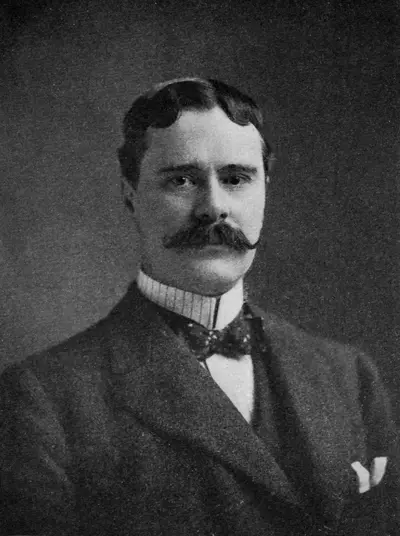
Owen Wister was an American writer and historian, considered the "father" of western fiction. He is best remembered for writing The Virginian and a biography of Ulysses S. Grant.
