Frederick Douglass Quotes
I love the pure, peaceable, and impartial Christianity of Christ; I therefore hatethe corrupt, slaveholding, women-whipping, cradle-plundering, partial, and hypocritical Christianity of this land. Indeed, I can see no reason, but the most deceitful one, for calling the religion of this land Christianity. I look upon it as the climax of all misnomers, the boldest of all frauds, and the grossest of all libels.
Douglass, Frederick. Narrative of the Life of Frederick Douglass, an American Slave. Anti-Slavery Office, 1845, p. 118.

Observation of the other fugitives in Canada

In most countries those who identify with the economic views of Mises also tend to be strong supporters of orthodox religion—usually Christianity. American conservative Republicans are typical. However they rarely are aware of views and quotations of their intellectual guru that are evidenced by this quote. See {632408} for another quotation that distressed many European conservative devotees of Mises.


There were some who kept no slaves and morally opposed slavery at the time or the birth of Christ.

She was referring to the political leaders of the South who were patriots and slave owners.


The issue of slavery which had been suppressed in Congress for the first decades of the nation broke out when Missouri statehood was considered. By previous agreement, slavery was not even discussed in Congress but the time period elapsed. Tallmadge not only proposed that no more slaves could come into Missouri {613176} but most shocking to the Southerners was that every person born in the new state would be free at the age of 25. In a generation, there would be no more slavery in Missouri and there would be no economic compensation for slave owners at all. The House of Representatives accepted the amendment, but it failed in the Senate. At that time, Senators were not elected by voters but were appointed by the state legislators and the Southern slave states had a disproportionate share of the senate from a population point of view. But what this quotation shows clearly that a majority of the country in 1819 were opposed to slavery and were willing to end it without compensation.


This was written from Washington DC where slavery was legal at the time.

In addition to all the other things wrong with slavery, the fact that it denies a man the right to his own labor was for Emerson, bad enough to render the South immoral and uncivilized.

This is a memorable historical quotations because it shows the extreme level of hypocrisy and lack of logic of which man is capable of when his way of life and world view is threatened. In this case Gordon sees the right to own slaves as a basic civil right. He does not see that the right of possessing slaves totally denies virtually all civil rights to the slave. In his and other Southern views, to assure a man’s liberty he had to have the right and freedom to deny freedom to others, torture others at will, destroy families and remove all hope and aspiration of some people.


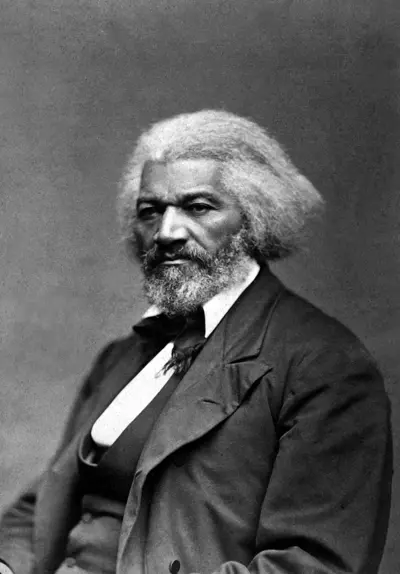
Frederick Douglass was an American social reformer, abolitionist, orator, writer, and statesman. After escaping from slavery in Maryland, he became a national leader of the abolitionist movement in Massachusetts and New York, becoming famous for his oratory and incisive antislavery writings. Accordingly, he was described by abolitionists in his time as a living counterexample to slaveholders' arguments that slaves lacked the intellectual capacity to function as independent American citizens. Likewise, Northerners at the time found it hard to believe that such a great orator had once been a slave.
