Elizabeth I Quotes
I have already joined myself in marriage to a husband, namely the kingdom of England.
Elizabeth I. "Speech to the House of Commons, January 28, 1559." Elizabeth I: Collected Works, edited by Leah S. Marcus, Janel Mueller, and Mary Beth Rose, University of Chicago Press, 2000, p. 59.

The revolutionary acts from some of the more radical colonists but the colonial power structure was trying to negotiate for changes from the taxation and rights-impinging laws that Parliament had passed. Within a year the Continental Congress would take a more revolutionary position when this petition yielded no betterment-- {636864} and {636958}.

Although Queen Victoria was modern and liberal in many respects, the idea of self-determination by majority vote was unthinkable and certainly undesirable for her. She was not opposed to lands and peoples changing empires and peoples per se. It was how the decision was made that was critical to her. Sovereigns had been buying, selling, and trading lands and peoples for centuries. And after wars, the winners would also reallocate the kingdoms of the loser. But the idea of a democratic plebiscite making the decision was unacceptable. To her and many others of the day, power struggles between factions, politicians, and sovereigns themselves would cause them to inflame the passions of the people and/or bribe the people to vote to change their allegiance. She saw popular but possibly unscrupulous politicians “blackmailing” kings and queens and if payments from the treasury would not be made, the politician would stir up a movement to transfer allegiance to another sovereign who might well be willing to pay.


1st Duke of Wellington. The King was somewhat delusional, and there is no historical records of his ever having personally fought in the Napoleonic wars at all. This quotation has often been nominated for the most tactful in history.


Many American colonists had relatives and friends in England, and Paine argued that American independence would help and not het the English people.

England is entering the war against Germany The German war plan called for attacking France through Belgium. However, Belgium was intent on remaining neutral. International law prohibited a neutral country from allowing troops of either side to enter and maneuver in its territory. ({642178}). When Germany moved into Belgium, the Belgians resisted. England had a treaty with Belgium that it would protect Belgian neutrality in the event of any war in Europe. England then sided with Belgium {642175} and committed to send troops to help Belgium oust the Germans. The Kaiser was furious and could not understand that the English would go to war when there was no economic need or advantage for them to do so. Wilhelm II did not have much respect for treaties, promises, or honor other than military honor. He had earlier convinced himself that the English would not fight for a scrap of paper, especially in a land war. {642105}


Windsor was the Kings palace and the King felt that was all he really controlled.


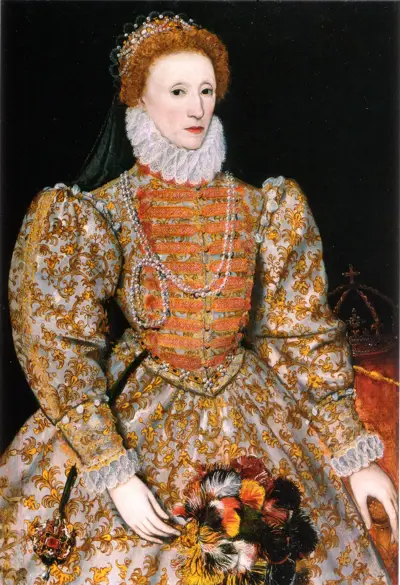
Elizabeth I was Queen of England and Ireland from 17 November 1558 until her death in 1603. Sometimes called the Virgin Queen, Gloriana or Good Queen Bess, Elizabeth was the last of the five monarchs of the House of Tudor.
