Queen Victoria Quotes
It will be a calamity for ages to come if this principle is to become part of the international law, viz. "that a people can at any time transfer their allegiance from the Sovereign of one State to that of another by universal suffrage (under momentary excitement)
Although Queen Victoria was modern and liberal in many respects, the idea of self-determination by majority vote was unthinkable and certainly undesirable for her. She was not opposed to lands and peoples changing empires and peoples per se. It was how the decision was made that was critical to her. Sovereigns had been buying, selling, and trading lands and peoples for centuries. And after wars, the winners would also reallocate the kingdoms of the loser. But the idea of a democratic plebiscite making the decision was unacceptable. To her and many others of the day, power struggles between factions, politicians, and sovereigns themselves would cause them to inflame the passions of the people and/or bribe the people to vote to change their allegiance. She saw popular but possibly unscrupulous politicians “blackmailing” kings and queens and if payments from the treasury would not be made, the politician would stir up a movement to transfer allegiance to another sovereign who might well be willing to pay.
Victoria Alexandrina, 1819-1901, [Queen Victoria], Queen of Great Britain and Ireland & Empress of India, Letter to her Prime Minister, John Russell, August 21, 1848
Sourced by: Eigen's Political and Historical Quotations


Hobson, like Mark Twain in America, was a major critic of imperialism.


See Carl Schurz {33636} for an 1872 version and G. K Chesterton for perspective {597471}.

The revolutionary government started out condemning annexation and insisting on self-determination for all. After WWII Stalin made a mockery of these original ideals by taking over most of Eastern Europe.

This was a classic debate over universal male suffrage. Rainborough had made a forceful argument for equality as a spokesperson for the Levellers in this famous debate. See {619710}. Ireton eloquently gave the classic counter-argument that property owners had much more at stake and therefore should have much more of a say on governmental affairs. Early America actually sided with Ireton, but modern America holds with Rainborough.

The “proofs” were diplomatic assurances—treaties—that England would guarantee the territorial integrity of Belgium. The British made strong diplomatic efforts to persuade Germany not to occupy Belgium. The German’s none the less send armies in under the excuse that if they did not, the French would occupy the country and have a strategic advantage over them. Diplomacy could do no more good. England had to send troops or renege on its obligations. So England was in WWI.


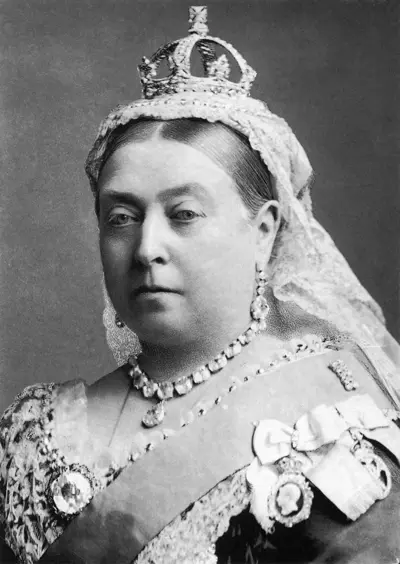
Victoria was Queen of the United Kingdom of Great Britain and Ireland from 20 June 1837 until her death in 1901. Known as the Victorian era, her reign of 63 years and seven months was the longest of any British monarch until surpassed by that of Elizabeth II. It was a period of industrial, political, scientific, and military change within the United Kingdom, and was marked by a great expansion of the British Empire. In 1876, Parliament voted to grant her the additional title of Empress of India.
