Georges Jacques Danton Quotes
I had rather be guillotined than a guillotiner.
Carlyle, Thomas. The French Revolution: A History. Vol. 3, Chapman and Hall, 1837, p. 331.


John Brown, in a futile effort to start a slave insurrection, raided the arsenal at Harper’s Ferry. His raid failed and he was captured and hanged. However, he became a martyr to the abolitionist movement, and his death is still sung of gloriously to this day. See {584889} and {604003}.


Although Bolivar is generally seen as a great idealist and humanitarian, he had his brutal and immoral aspects. This quotation proves that Bolivar ordered the bloody massacre of helpless Spanish prisoners of war including those in the hospital. Also the beheading illustrates the bitterness and barbarity of the wars for independence from Spain. See {632671} for Bolivar’s rationale for massacring helpless prisoners of war.


Referring to the French Revolution:


Later, in 1973, he himself was denounced and sentenced to the guillotine. When he was sentenced, hecklers asked him if his blood was too pure for execution throwing his quotation back at him.

The king was found guilty and was decapitated, but not wearing a crown.


Note that the fact that she had suffered sposal abuse. She poisoned her husband who repeadedly beat her and her children. Althoughh the evidence was heard, there was nothing that could in the then German legal system used to justify the killing of a husband. Germany was not then the only country which would not allow violent spousal abuse as a defense or a mitigating factor in the sentence. The German punishment for a woman murdering her husband was then beheading. Even as late as the mid 19th century, they were still decapitating trangressors of their laws. The Germans actually developed a special kind of sword with no point just for beheadings.
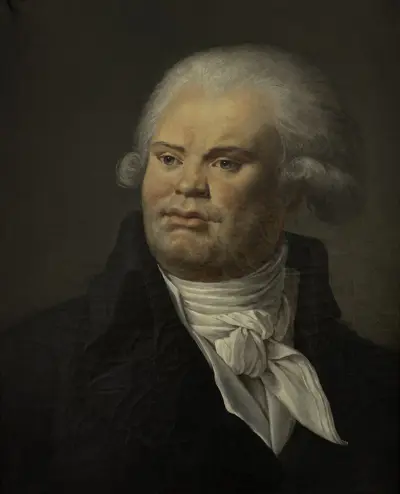
George Jacques Danton was a leading figure in the early stages of the French Revolution, in particular as the first president of the Committee of Public Safety. Danton's role in the onset of the Revolution has been disputed; many historians describe him as "the chief force in the overthrow of the French monarchy and the establishment of the First French Republic". He was guillotined by the advocates of revolutionary terror after accusations of venality and leniency toward the enemies of the Revolution.
