Antoine Barnave Quotes
Was the blood which has just been shed so pure?
Later, in 1973, he himself was denounced and sentenced to the guillotine. When he was sentenced, hecklers asked him if his blood was too pure for execution throwing his quotation back at him.
Antoine Barnave, 1761–1793, French Orator, Deputy of the French National Assembly, Statement justifying the early reign of terror of the French Revolution
Sourced by: Eigen's Political and Historical Quotations

Nathaniel Bacon had led a rebellion in Virginia and had routed the Governor’s troops and caused him to flee leaving control of Virginia to Bacon and his followers who were far more democratic and advanced. However Bacon succumbed to swamp fever, and his followers could not hold the colony together giving the Governor a chance to establish his authority. He then went on a vengeful reign of terror, executing all of Bacon’s followers he could get his hands on. With no danger to the authority of the Crown, King Charles felt that Berkeley had gone too far. The King’s father Charles I had been executed in the aftermath of the English Civil War, but he had executed far fewer than Berkely had done in Virginia.

The revolution turned on many of its initiators including Vergniaud. He was guillotined along with other Girondists.

This proverb only makes sense in the light of understanding the Arab concept of revenge—“blood.” In a rural desert environment where little can be expected of government, the Arabs have developed a law enforcement and peace keeping mechanism which while primitive from modern standards, nevertheless worked to some degree. It is that revenge—“blood” is a moral necessity and obligation of all people, and revenge is not limited by time or to the individuals involved in the first incidence. The immediate family are the first to extract revenge, but the extended family follows and often the entire clan. Sometimes revenge is tribal or even national. Anyone who fails to revenge a member in his group is not only a disgrace, but is a clear and present danger to the group because then they can be attacked with impunity. So revenge is a strong obligation of the group members and blood must be paid with blood no matter how many generations it may take. The only thing that keeps me and my family safe, is the surety what whosoever kills one of us will themselves be killed or if they die a natural death we will take revenge on one of the evildoers relatives. Crime must never pay!

John Brown, in a futile effort to start a slave insurrection, raided the arsenal at Harper’s Ferry. His raid failed and he was captured and hanged. However, he became a martyr to the abolitionist movement, and his death is still sung of gloriously to this day. See {584889} and {604003}.


At Tippecanoe, General Harrison defeated the Indians but suffered over 60 of his men killed and many more wounded. Newly supplied modern English weapons were found on captured Indians. There was a call for war with England:


The terror to which he referred was to the French Revolution’s executing former aristocrats and then including anyone suspected of monarchist sympathies. This quotation shows how fanatics can rationalize evil as justice.


Actually under Islamic law teh relatives of the victems can grant mercy, and they are frequently paid money by the family and friends of the accused murderer to do so. in many cases, the wealthy offender can avoid even long jail terms. However, if the victim's family is also very wealthy, they would often exact vengeance and have the killer executed. This is one major difference between must Western law and Islamic law. In the West we do not giver the relatives of the victim any significant role in the process. Vengeance is not recogniszed and it is society that acts. Recently some states have allowed victim families to man imact statment s to the jury or judge. There had been an aborted revolution and several hundred Turks were killed in the battles betwen the revolutionists and the police and non-revolutionary soldiers.


Falwell supported capital punishment. In this statement he was describing it, not opposing it.


The British Government had offered a £20,000 prize for the first person who developed a practical method of determining longitude at sea. Most of the university, military and religious scientists of the day worked on astronomical instrument approaches but Harrison, a relatively unknown clockmaker with no social or scientific credentials, came up with an incredibly accurate clock that would function at sea and immediately calculate the longitude. The scientific establishment refused to certify Harrison for the price even after the British Navy had determined that his method worked. At the urging of the King, Parliament voted him the money.

1st Baron Macaulay

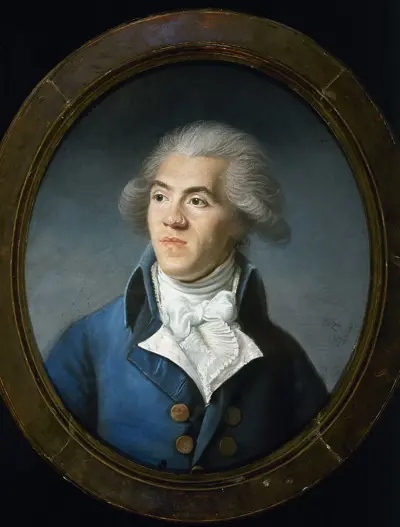
Antoine Pierre Joseph Marie Barnave was a French politician, and, together with Honoré Mirabeau, one of the most influential orators of the early part of the French Revolution. He is most notable for correspondence with Marie Antoinette in an attempt to set up a constitutional monarchy and for being one of the founding members of the Feuillants.
