Maximilien Robespierre Quotes
Terror is nothing other than justice, prompt, severe, inflexible; it is therefore an emanation of virtue.
The terror to which he referred was to the French Revolution’s executing former aristocrats and then including anyone suspected of monarchist sympathies. This quotation shows how fanatics can rationalize evil as justice.
Maximilien Robespierre, 1758-1794, French Jabcobin Revolutionist, Member, National Assembly & Committee of Public Safety, Speech to the National Convention, February 5, 1794
Sourced by: Eigen's Political and Historical Quotations

Terror conceptually in France and some other countries was the tool the government used to inhibit criminals.

The terror to which he referred was to the French Revolution’s executing former aristocrats and then including anyone suspected of monarchist sympathies.
Robespierre was the driving force behind the Reign of Terror where hundreds of thousands of French citizens were beheaded because they were accused of not being loyal enough to the regime.

The revolution turned on many of its initiators including Vergniaud. He was guillotined along with other Girondists.


In 2008 Pakistani Islamic terrorists, with the support of the Pakistani military, attacked Mumbai, India killing innocent civilians. Shoune was one of the Indian politicians who called for retaliation. The Indian government, however, restrained its forces and did not increase the cycle of violence.


Later, in 1973, he himself was denounced and sentenced to the guillotine. When he was sentenced, hecklers asked him if his blood was too pure for execution throwing his quotation back at him.


Nathaniel Bacon had led a rebellion in Virginia and had routed the Governor’s troops and caused him to flee leaving control of Virginia to Bacon and his followers who were far more democratic and advanced. However Bacon succumbed to swamp fever, and his followers could not hold the colony together giving the Governor a chance to establish his authority. He then went on a vengeful reign of terror, executing all of Bacon’s followers he could get his hands on. With no danger to the authority of the Crown, King Charles felt that Berkeley had gone too far. The King’s father Charles I had been executed in the aftermath of the English Civil War, but he had executed far fewer than Berkely had done in Virginia.


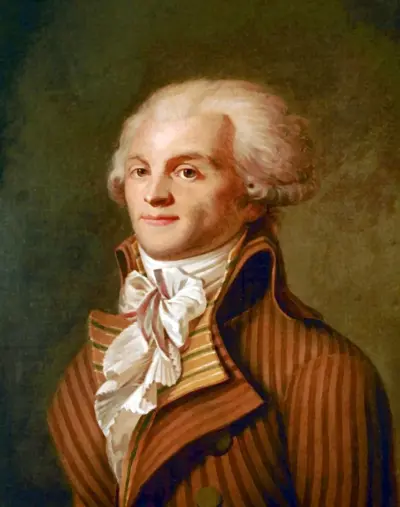
Maximilien François Marie Isidore de Robespierre was a French lawyer and statesman who was one of the best-known and most influential figures of the French Revolution. As a member of the Constituent Assembly and the Jacobin Club, he campaigned for universal manhood suffrage and the abolition both of celibacy for the clergy, and slavery. In 1791, Robespierre became an outspoken advocate for the citizens without a political voice, for their unrestricted admission to the National Guard, to public offices, and for the right to carry arms in self-defence. Robespierre played an important part in the agitation which brought about the fall of the French monarchy on 10 August 1792 and the summoning of a National Convention. His goal was to create a one and indivisible France, equality before the law, to abolish prerogatives and to defend the principles of direct democracy.
