Maximilien Robespierre Quotes
Terror is only justice: prompt, severe and inflexible; it is then an emanation of virtue; it is less a distinct principle than a natural consequence of the general principle of democracy, applied to the most pressing wants of the country.
Robespierre, Maximilien. Virtue and Terror. Verso, 2007, p. 115.

The terror to which he referred was to the French Revolution’s executing former aristocrats and then including anyone suspected of monarchist sympathies. This quotation shows how fanatics can rationalize evil as justice.

Terror conceptually in France and some other countries was the tool the government used to inhibit criminals.


Elliott had electrocuted over 400 condemned criminals including Sacco and Vanzetti and the first woman who was electrocuted.

Compare a similar sentiment by James Madison, The Federalist, No. 51, below


The revolution turned on many of its initiators including Vergniaud. He was guillotined along with other Girondists.


This is one of the major reasons that the relations between police and the communities they are policing is so important. Also, the style and courtesy that the IRS tax collectors exhibit is very important.


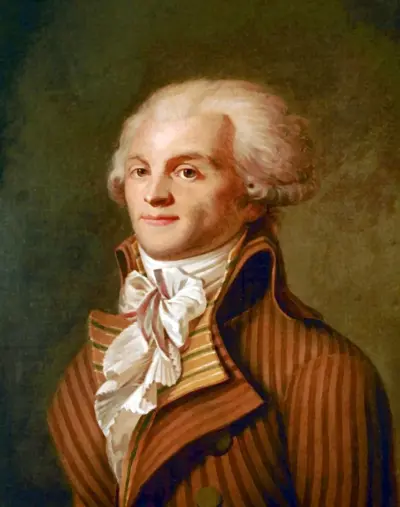
Maximilien François Marie Isidore de Robespierre was a French lawyer and statesman who was one of the best-known and most influential figures of the French Revolution. As a member of the Constituent Assembly and the Jacobin Club, he campaigned for universal manhood suffrage and the abolition both of celibacy for the clergy, and slavery. In 1791, Robespierre became an outspoken advocate for the citizens without a political voice, for their unrestricted admission to the National Guard, to public offices, and for the right to carry arms in self-defence. Robespierre played an important part in the agitation which brought about the fall of the French monarchy on 10 August 1792 and the summoning of a National Convention. His goal was to create a one and indivisible France, equality before the law, to abolish prerogatives and to defend the principles of direct democracy.
