Alejo Carpentier Quotes
I had breathed in the atmosphere created by Henri Christophe, the monarch of incredible aims, much more surprising than all the kings invented by the surrealists.
Carpentier, Alejo. Prologue. The Kingdom of This World. Translated by Harriet de Onís, Alfred A. Knopf, 1957.

Province of the Congo. Both the British and the Belgians were vying for Katanga to become a part of their empire. Msri, a cruel tyrant, was hated by his people, many of whom he had had murdered.


The revolutionary acts from some of the more radical colonists but the colonial power structure was trying to negotiate for changes from the taxation and rights-impinging laws that Parliament had passed. Within a year the Continental Congress would take a more revolutionary position when this petition yielded no betterment-- {636864} and {636958}.


Nguyen Ai Quoc was early pseudonym. At the Versailles WWI Peace Conference a young, 29 year old, Ho Chi Minh showed up and tried to present his petition for Vietnamese independence to Woodrow Wilson and the other non-French leaders. (Indochina was then a French colony.) Little attention was paid to him and his petition. Even though Wilson was for national self determination, all the other major WWI Allies had overseas colonial empires. After suffering losses from German aggression they were interested in getting those back plus reparations—not ceding away any of their then existing territory. They paid little attention to Wilson on the self determination issue and the Senate would not support Wilson on the League of Nations which then might have pressed for self determination. Ho was snubbed. It was a costly, unjust snub for the world.


“Somsteu” was the name the Africans gave to Theophilus Shepstone, 1817-1893, British Colonial African Administrator.
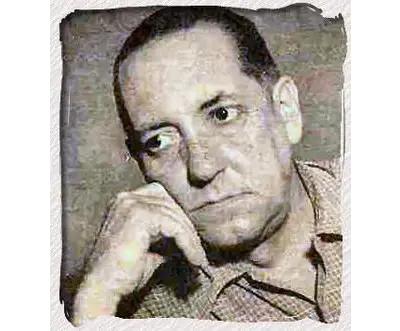
Alejo Carpentier y Valmont was a Cuban novelist, essayist, and musicologist who greatly influenced Latin American literature during its famous "boom" period. Born in Lausanne, Switzerland, Carpentier grew up in Havana, Cuba, and despite his European birthplace, he strongly self-identified as Cuban throughout his life. He traveled extensively, particularly in France, and to South America and Mexico, where he met prominent members of the Latin American cultural and artistic community. Carpentier took a keen interest in Latin American politics and often aligned himself with revolutionary movements, such as Fidel Castro's Communist Revolution in Cuba in the mid-20th century. Carpentier was jailed and exiled for his leftist political philosophies.
