Andrew Jackson Quotes
I feel in the depths of my soul that it is the highest, most sacred, and most irreversible part of my obligation to preserve the union of these states, although it may cost me my life.
Jackson, Andrew. Correspondence of Andrew Jackson. Edited by John Spencer Bassett, vol. 4, Carnegie Institution of Washington, 1929.


Lincoln was a deist but he was never a favorite of the official clergy of any of the religions. When he ran for President in 1860, 20 of the 23 clergymen of his home town, Springfield, IL, opposed him. As he assumed office he was much more prudent in his religious remarks and in the view of some historians political realities and pragmatics caused him to be more circumspect. His oldest friend and law partner believed him to be an unbeliever. See {586285}.


There were major construction projects prepared for the Capitol building at the beginning of the Civil War. There was a question of whether the expensive construction was then appropriate.


It did sweep the polls. The Protestant Unionists won 40 seats; Sinn Fein and the Nationaists won only 6 each.

The sermon was so stirring that it was published in Pittsburgh and distributed throughout the Union.

Garrison and some of the other radical abolitionists actually argued for dissolution of the Union as a means to end slavery. These abolitionists were convinced that if the United States split in two, slavery would end. See {613764} & {613626} for a description of the logic.


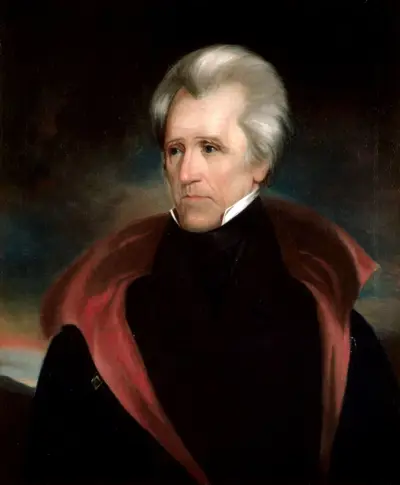
Andrew Jackson was an American lawyer, soldier, and statesman who served as the seventh president of the United States from 1829 to 1837. Before being elected to the presidency, Jackson gained fame as a general in the United States Army and served in both houses of the U.S. Congress. An expansionist president, Jackson sought to advance the rights of the "common man" against a "corrupt aristocracy" and to preserve the Union.
