William Godwin Quotes
He has no right to his life when his duty calls him to resign it. Other men are bound ... to deprive him of life or liberty, if that should appear in any case to be indispensably necessary to prevent a greater evil.
William Godwin, 1756-1836, British Philosopher and Novelist, Enquiry Concerning Political Justice and Its Influence on Morals and Happiness, 1793
Sourced by: Eigen's Political and Historical Quotations


Joseph Addison had earlier written of such a situation. Recent research has strongly suggested that Hale may never have said these words. The American patriots wanted to have heroes and may not have been too worried about the documentation and historical research. See {621112}


Ataturk had been a military hero, but was very much opposed to war and military adventurism not unlike the Dwight Eisenhower and Colin Powell type leaders. However, the one thing that he thought worth the sacrifice of his own and other Turkish lives was Turkish independence and sovereignty. Historically, the Ottoman Empire which Ataturk finally ended, had dominated half of Europe and all of the Mid East at the cost of sovereignty of other nations and Ataturk saw no more important virtue with dying for than national sovereignty. See {125322} and {584501}.

Quintus Horatius Flaccus

Compare Nathan Hale's last words.


Lincoln was referring to the "house divided against itself" speech. His remarks were addressed to friends who were trying to dissuade him from delivering the address.


The Poles were fighting the Russians. Pulaski was a Field Marshall. This was before he had come to America and fought in the American Revolution.


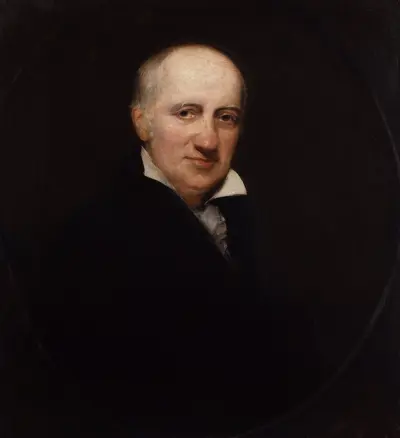
William Godwin was an English journalist, political philosopher and novelist. He is considered one of the first exponents of utilitarianism and the first modern proponent of anarchism. Godwin is most famous for two books that he published within the space of a year: An Enquiry Concerning Political Justice, an attack on political institutions, and Things as They Are; or, The Adventures of Caleb Williams, an early mystery novel which attacks aristocratic privilege. Based on the success of both, Godwin featured prominently in the radical circles of London in the 1790s. He wrote prolifically in the genres of novels, history and demography throughout his life.
