Theodore Roosevelt Quotes
I esteem it my duty to use every endeavor to prevent this growing monopoly [electric power], the most threatening which has ever appeared, from being fastened upon the people of this nation.
Innovative science and technology from Edison and Tessla had produced an electrical industry that rapidly formed into a monopoly.
Theodore Roosevelt, 1858-1919, 26th President of the United States (Republican, NY), Quoted in New York Daily Tribune, January 16, 1909
Sourced by: Eigen's Political and Historical Quotations


The “rebate agony” referred to a corrupt practice of the Railroads and the Large Monopolies. The railroads charged a very high rate for the transportation of important products like beef and oil. However, secretly they gave back a large percentage of the transportation rate charged to the trusts. They in turn could cut their prices and undersell all the smaller competitors who were paying “full freight” and could not afford to match the lower price. As soon as the smaller competitors were driven out of business in an area, the trust raised its rates even higher than they charged originally. The Railroad had made a small but reasonable profit on the freight of the trusts but they were guaranteed all their business. They also made huge profits on the higher rates that the small companies paid until those companies were driven out of business. Journalists like Ray Baker and Ida Tarbell had uncovered the rebate scheme which enabled the trusts to steal high amounts from the general public through unreasonably high prices. President Theodore Roosevelt was committed to try and regulate the railroads and not allow rebates but charge the same public rate to all with no rebates. Socialists like Sinclair, thought that this attempt would be hopeless—that the damage had already been done, and the trusts now had so much money that they could buy state legislatures and many in Congress to preserve their dominance.


Railroads and other large markets shared dominated by a few large corporations.


This is an interesting quotation because it shows that utilities and monopolies using their power and money to avoid effective pro consumer regulation is nothing new and was ongoing as soon as there were government granted monopolies that were supposed to be regulated.

Samuel Langhorne Clemens, 1835-1910. The nature of telephone technology made it easy for companies to obtain monopolies for different areas of the country. When there is a monopoly, there is a huge tendency for the controlling company to charge very high prices and have poor customer service as the usual competition required for quality performance under capitalism is nonexistant. So in 1890, there was the same resentment of the telephone companies, that existed over a century later when there was still a monopoly. Regulation helped somewhat, but the capabilities of the monopolist began to include lobbying and campaign contributions so that typically, in the 21st century, the local telephone companies had much control over the State Commissions that were supposed to regulate them. Long distance service, whose monopoly was broken up by the Federal Courts became a wonderful service for customers and the prices were a tiny fraction of what they had been under their old monopoly.

At the time, there was generally only a single newspaper in an area in New Zealand.


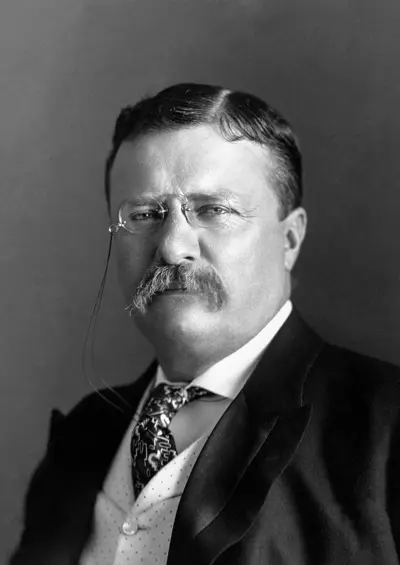
Theodore Roosevelt Jr., often referred to as Teddy or his initials T. R., was an American statesman, conservationist, naturalist, historian, and writer, who served as the 26th president of the United States from 1901 to 1909. He previously served as 33rd governor of New York from 1899 to 1900 and the 25th vice president of the United States from March to September 1901. Roosevelt emerged as a leader of the Republican Party and became a driving force for anti-trust and Progressive policies.
