Jon Huntsman Jr. Quotes
I don’t think that you have to run down someone’s reputation in order to run for the Presidency.
At that time, most of the leading Republicans practiced negative campaigning with vicious personal attacks that were often untrue. He was the only one of the 9 candidates who did not engage in the technique. He came in close to last.
Jon Mease Huntsman Jr., Governor of Utah (Republican), U. S. Ambassador to China, Candidate for Republican Presidential Nomination, Campaign Speech, June 25, 2011
Sourced by: Eigen's Political and Historical Quotations

There have been few modern politicians who would be so firm against negative campaigning by members of his own party. In reality, although Roosevelt was very popular amongst the people, he was never a favorite of the party politicians. For example, see {585078}.

He was the only candidate who was not visciously attacked and slandered by the others, and he did no attacking himself. However, he simply did not attract the voters as did the other candidates who were so negative about their opponents. The Republican party primary voters were so insistent on political party purity that most of the candidates were reduced to the lowest forms of debate and standards of veracity. All the candidates were weakened and diminished by that form of negative primary process. Mitt Romney finally won the nomination but had been bruised badly by the Republican primary election. He last the general election badly.


Calumnaire fortiter, et aliquid adhaerebit. See Pierre Beaumarchais for a later version of this political tactic.
At the time political parties and some candidates had their own newspapers and attacked their opponents through those rather than directly themselves which would have been seen as gross and undignified, Slander and attacks have been a part of American politics since its inception. The degree and extent reached its pinnacle in the early 21st century.

After a memo was circulated about House Speaker-elect Tom Foley that implied that the congressman was a homosexual:. at the Republican National Committee, source of the offending letter


This was the first of the famous Lincoln-Douglas Debates. The men were contesting for the U. S. Senate. Douglas won the election.


His interviewer had asked him what he, as a cultural critic and a political essayist, thought of Donald Trump’s campaigning style.


His older brother was running for Consul—the highest elected office of the Roman Empire. The Handbook, was his advice to his brother as to how to conduct his campaign.

Dr. Sovern played Ronald Regan in the debate preparation of Walter Mondale
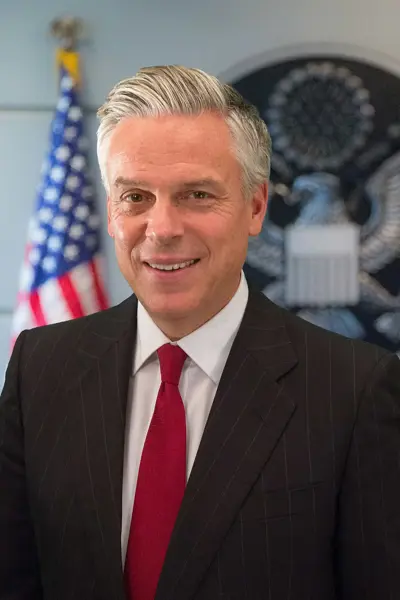
Jon Meade Huntsman Jr. is an American businessman, diplomat and politician who served as the 16th Governor of Utah from 2005 to 2009. A member of the Republican Party, he served as the Ambassador of the United States to Russia from 2017 to 2019, to China from 2009 to 2011, and to Singapore from 1992 to 1993.
