Thomas Wentworth Higginson Quotes
I do not as yet see the slightest obstacle, in the nature of the blacks, to making them good soldiers,—but rather the contrary. They take readily to drill, and do not object to discipline; they are not especially dull or inattentive; they seem fully to understand the importance of the contest, and of their share in it. They show no jealousy or suspicion towards their officers.
The officers were all white, and Higginson was the Commander. It was his first experience with Negro troops, and he had heard much extrapolation from racist attitudes about Blacks not being able to make good soldiers. Ironically, the same suspicions of Blacks as military men carried over into the Second World War when this canard was disproved so publicly that it finally was erased with the exception of the most inveterate racists for whom no evidence would matter.
Thomas Wentworth Higginson, 1823–1911, Unitarian Minister, Author, Abolitionist, Feminist, Reformer & Soldier, Observation of Black Soldiers in the Civil War, “Leaves From an Officer's Journal”, The Atlantic Monthly, November 1864
Sourced by: Eigen's Political and Historical Quotations

Benjamin was the Confederacy’s strongest proponent for use of Negro troops in exchange for a promise of freedom. Ironically, the racial prejudice of the Southern soldier may well have doomed the South’s last chance for independence. Lee, although he personally favored such a course of action, could not get a general sentiment from the army as a whole.


At this point, Stearns had already organized and trained 3,000 Black Troops from the South. He was a strong advocate of recruiting and enlisting as many slaves as they could. Ironically, the desire to serve in the Army with a weapon, was symbolically a powerful symbol of equality and manliness that it was effective with Northern free Blacks and Southern escaped slaves. Another interesting thing was that Stearns insisted that the ex-slaves not only made better soldiers than the Confederates but that they were better than most Union White troops. That view was not promulgated very publically.

When the Confederate Government realized that the Union was planning to arm escaped slaves and induct them into the Union Army, they quickly passed a law that declared any escaped slave who joined the Union Army or wore its uniform was guilty of Treason and would be executed. Most Union Generals one way or another got word to the Confederate Officers that they had better treat all Negro Union Soldiers as prisoners of war. Even President Lincoln warned the South. Butler, however, had a large number of Negro troops in his area and had heard threats of some of the Southerners to execute Black prisoners of war. He had a way of making things very clear, and he was able to prevent murder of any of his Negro troops despite the Treason law.
loyalty oath to the King of England His “Ethiopian Regiment” was the first Black military regiment in North America. Soon after, Rhode Island organized a Black military unit—see {613949}.

By 1863, Negro troops were being used to fill in gaps in the Union forces. Many union generals resisted having colored troops under their command. Thomas, however, welcomed them, and won several major battles where black soldiers were instrumental in victory.


Despite the critical need of the war, racism was so extensive in the WWII military that Blacks were relegated to menial duty of cooking, truck driving and construction but were actually not allowed to fight at the beginning despite the fact that many had volunteered. Many whites—especially the southerners—were convinced that Negroes could not fight, that they lacked the courage and commitment. The need for troops in the Pacific theater was so great that in the invasion of Saipan that was so difficult, Black troops were committed to the fight and performed brilliantly. The Commandant of the Marine Corps, General Vandergrift was not only the first Marine 4 star general who was on active duty, but he personally was a recipient of the Medal of Honor. When he spoke, all marines and many others in the service listened. This was the break-though. Negroes in combat was no longer some kind of social experiment for most Marines except the most vitriolic rascists.

This letter was signed by a local white Priest and two other leading planters. This quotation gives us a marvelous feeling for what occurred when parts of the South was occupied by the Union Army shortly after the Emancipation Proclamation was issued. Minor and his fellows just did not “get it.” The concept of freedom of the slaves was intellectually so foreign to them, that they wanted the Union Army to “compel” the freed slaves to work. They were horrified that slaves went wherever they wanted, and they were most outraged when former slaves who had enlisted in the Army, would “visit” their old plantation setting such a terrible example. The letter gives us a perspective on how difficult it was to change the mental set of Southern Whites and why Reconstruction was so difficult. The year of the letter is somewhat uncertain as the original letter appears to be dated 1862 but the writing is not clear and that date does not comport with the history of the era and we believe 1863 was the correct year. The photograph is of the first official colored troops mustered into the Union Army. They were called the Louisiana Native Guards and contained the ex slaves who went over to the Union side just before the time this slave owner complained. These ex slaves, in uniform, and with arms would sometimes visit the plantations where they and been enslaved, thrilling the remaining slaves and infuriating owners like Minor.


Lincoln, just before the Civil War, quoted Jefferson that if slavery were not ended in America the results would be disastrous. But Lincoln at the time probably did not imagine how right Jefferson was, and Jefferson himself probably 1 how terrible the Civil War would be.

One of the most amazing things about Abraham Lincoln is the way he grew and matured over time. In 1854 he was not sure that the Negro could be the equal of the white. As he met more Black leaders, saw more, reflected more, and had more responsibility, he grew and developed his views on race. But it was statements like this that led to the great distrust that the very strong abolitionists like Wendell Phillips had in him.

Fremont and some of the Radical Republicans wanted Lincoln immediately to declare the slaves of the rebelling states free. As a major general in charge of an area, he wrote a military order emancipating all the slaves in his jurisdiction. President Lincoln countermanded the order as soon as he found out. He wanted Fremont to only free the slaves whose owners were actively working against the union. Lincoln needed to hold the border states like Maryland in the Union and was working on a plan whereby slave owners who were loyal to the Union would be economically compensated when their slaves were freed. If loyal slaveholders in Fremont’s area would lose their slaves with no compensation, Lincoln feared that the otherwise loyal border states would be driven to the confederacy thus shifting the balance of power. Lincoln had his own plan for emancipation and would not allow Fremont to alter that. As a result of this speech, the Radical Republicans nominated Fremont to run against Lincoln. For a few weeks he looked like he would run, but then he and Lincoln made a deal. Lincoln fired Montgomery Blair, Fremont’s arch enemy, from the cabinet, and Fremont withdrew from the election.

The card was issued to all American troops in the theater. Similar versions were distributed to troops in Iraq, and other Arab countries.
Lincoln had promised amnesty to Southerners who would pledge loyalty to the Union. What many feared was that this would include slave owners re-enslaving their former "property," or that the government would allow them to do so in order to stop the rebellion.


Negotiations regarding the exchange of prisoners and property. This was his view of his supposed obligation to return Negro slaves who had escaped and gone to the British during the war. The treaty of peace specified that all “property” including slaves, taken by, the British be returned to the Americans. But he and other officers did not always do so as they thought they had higher moral obligations. See {621936} for example.

Washington and his staff had throughout the Revolution wanted to enlist Negroes but were thwarted by the Southern and conservative blocs of the Continental Congress when they tried it in the South. However, they finally succeeded in Rhode Island. Other states followed when it was clear that the Rhode Island experiment had been successful. See {614120} for the policy statement of the legislature and {614119} for the motto and a picture of the Negro regiment. This was however not the first Black military unit in North America. The Loyalist Governor of Virginia had formed a regiment comprised of slaves who he emancipated. See {636965}.

Miller was the first Black American admitted to a Graduate Program—Johns Hopkins—in Mathematics

Just a month earlier Washington had issued a contradictory order. See {614221}. The Continental Congress, under pressure from the Southerners, compromised.
Washington quickly changed his mind when he realized that there were many Negroes fighting for his army and acquitting themselves very well. The pressure for troops and the English invitation to Negroes to help them and get their freedom, caused Washington to flip-flop on this point to the distress of most of his fellow Southerners. See {614220}.

This part of Taft’s Inaugural Address shocked the South and much of the North. But these were the days when the Republican Party was the liberal party on racial issues and the Democratic Party housed most racists and bigots. On this, the parties would flip flop after the Democrats passed the Civil Rights and Voting Rights Bill. Both Taft and TR were racial liberals and the South coalesced around Woodrow Wilson, an intellectual but an inveterate racist.
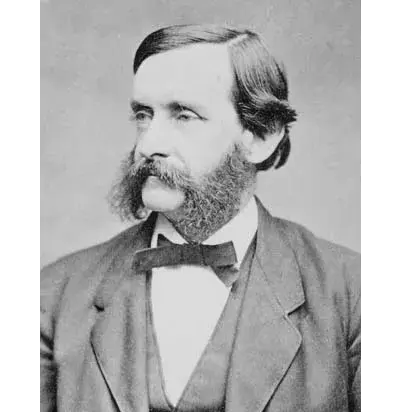
Thomas Wentworth Higginson was an American Unitarian minister, author, abolitionist, and soldier. He was active in the American Abolitionism movement during the 1840s and 1850s, identifying himself with disunion and militant abolitionism. He was a member of the Secret Six who supported John Brown. During the Civil War, he served as colonel of the 1st South Carolina Volunteers, the first federally authorized black regiment, from 1862–1864. Following the war, Higginson devoted much of the rest of his life to fighting for the rights of freed people, women and other disfranchised peoples.
