John Wilkes Booth Quotes
That means negro citizenship … By God, that is the last speech he will ever make.
John Wilkes Booth, 1838-1865, Actor and assassin, Statement after hearing Lincoln’s speech, 1865
Sourced by: Eigen's Political and Historical Quotations

After attending a Lincoln speech, Booth said to Lewis Powell, one of his band of conspirators, “Now, by God, I’ll put him through. That is the last speech he will ever make.”

Some whites opposed Slavery and new slave states, not becasue of any sympathy with Negroes or concern for the immorality of slavery, but becasue slavery made it difficult for the working white man to thrive.

Ironically Fort-Whiteman was arrested in Moscow in one of Stalin’s massive purges and sent to a Soviet Gulag where he died of starvation. He was one of several Americans who were Stalinist victims. Ironically, he was right about Blacks and revolutionary change, but whereas he thought the “revolution” would be a socialist and communist one, the “Civil Rights Revolution” was a legal, cultural and intellectual one. However, statements like this were taken advantage of by white racists who saw in every attempt to right the wrong of racial discrimination, a communist revolution in the making.


He was a deeply religious Christian which is one of the reasons that he was appointed to head the Freemen’s Bureau to integrate the emancipated slaves into society. Howard University was named for him, and he served as its First President. For more about the Bureau. See {629185}.and {629187}.


This proposed Amendment would also have repealed the 14th and 4th Andmendments

Despite the critical need of the war, racism was so extensive in the WWII military that Blacks were relegated to menial duty of cooking, truck driving and construction but were actually not allowed to fight at the beginning despite the fact that many had volunteered. Many whites—especially the southerners—were convinced that Negroes could not fight, that they lacked the courage and commitment. The need for troops in the Pacific theater was so great that in the invasion of Saipan that was so difficult, Black troops were committed to the fight and performed brilliantly. The Commandant of the Marine Corps, General Vandergrift was not only the first Marine 4 star general who was on active duty, but he personally was a recipient of the Medal of Honor. When he spoke, all marines and many others in the service listened. This was the break-though. Negroes in combat was no longer some kind of social experiment for most Marines except the most vitriolic rascists.

This painting depicted a young black girl walking to school surrounded by 4 U. S. Marshalls protecting her from the crowd of white racists trying to prevent her from attending an elementary school under court order. The vicious race hatred that school integration revealed was the national problem that was then surfacing. The graphic is the illustration that appeared in Look with that name.

The officers were all white, and Higginson was the Commander. It was his first experience with Negro troops, and he had heard much extrapolation from racist attitudes about Blacks not being able to make good soldiers. Ironically, the same suspicions of Blacks as military men carried over into the Second World War when this canard was disproved so publicly that it finally was erased with the exception of the most inveterate racists for whom no evidence would matter.

Lincoln had promised amnesty to Southerners who would pledge loyalty to the Union. What many feared was that this would include slave owners re-enslaving their former "property," or that the government would allow them to do so in order to stop the rebellion.


Phelps was a Copperhead Democrat who was a virulent racist, an enemy of Lincoln and supported McClellan against Lincoln in 1864. His extreme disrespect for the President and his racism was not appreciated in Vermont, and Phelps not only failed to help McClellan but destroyed his own credibility in his home state of Vermont. Phelps had been practicing law in New York City where there was a large Copperhead, racist and anti-Lincoln part of the population there.

Note that he referred to the “martyred President” as if Lincoln had recently been assassinated. It was actually 33 years after, and many of his audience had lived through what for most was their greatest national trauma. Springfield was the hometown of Lincoln and many in the audience had served under Lincoln in the Union Army. At that time, a statement like this praising Blacks was hated in the South, and unusual even in the North. However, politically the Solid South then always voted for the Democrats, so he and his party would never win any Southern States anyway, but the KKK was active in Illinois and many other Northern States. Adjacent Indiana was the headquarters of the KKK. There was much racism in the North so this speech was quite courageous. Republican Presidents Hayes, McKinley and Theodore Roosevelt made significant inroads in the racial problem and brought Blacks into Federal jobs. The progress, however, was totally undone by Woodrow Wilson who fired most Blacks who had gotten Federal jobs. Wilson needed the Southern legislators which was a major component of his party. He also came from New Jersey which had a strong KKK element who pressured him. Jim Crowe, the KKK and racism increased and the Republican Presidents thereafter did little for Civil rights. The great progress was made by Democratic Presidents Franklin Delano Roosevelt, Truman, and Lyndon Johnson and the Democratic Party replaced the Republicans as the Civil Rights party, and the Southern Democratic politicians switched to the Republican Party ending its traditional leadership in race relations


Smith, an extreme racist, was so rabid that MacGregor was supporting the Civil Rights Bill, he followed him off the House floor to make this statement. MacGregor jokingly told Smith that he was wrong. He had 17 Negroes in his District.

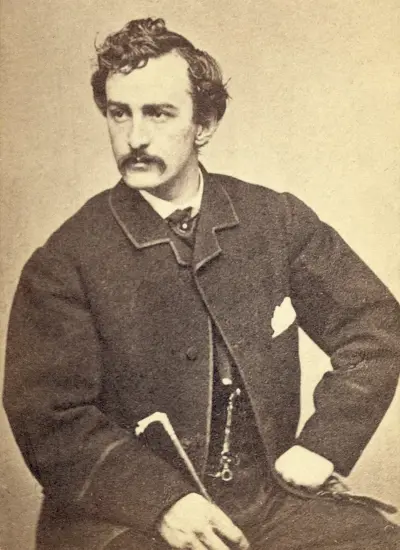
John Wilkes Booth was an American stage actor who assassinated President Abraham Lincoln at Ford's Theatre in Washington, D.C., on April 14, 1865. A member of the prominent 19th-century Booth theatrical family from Maryland, he was a noted actor who was also a Confederate sympathizer; denouncing President Lincoln, he lamented the recent abolition of slavery in the United States.
