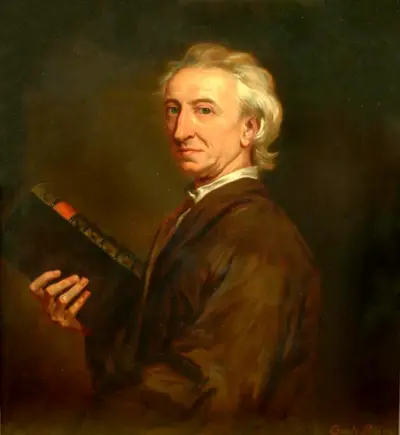
John Evelyn Quotes
I am that such a wretched Custome as play to that excesse should be countenanc’d in a Court, which ought to be an example of Virtue to the rest of the kingdome.
Written after witnessing the excesses of the Court of King Charles II:
John Evelyn, 1620-1706, British Writer, Commissioner for the Privy Seal, Diary, January 6, 1662
Sourced by: Eigen's Political and Historical Quotations


There are a number of reasons for punishing someone for violating a law. Confucius argues that when the person will no longer continue to commit the crime, further punishment is uncalled for. However, others would argue that there are other reasons to keep punishing a person including retribution / vengeance, incapacitation (people can’t commit crimes if they are in jail), and prevention (make an example to discourage others).


1st Earl of Beaconsfield
1st Earl of Beaconsfield. For a more modern and more colorful expression of this idea, See Sargent Shriver: XXXXX.
_0_thumbnail_47x47.jpg "Statue of Robert Hall in Leicester.")

Thomson had thousands of pages of notes, minutes and other documents as a result of his role as Secretary of the Continental Congress. There was much in the documents to embarrass many of the patriots who after the Revolution were the “great men of the nation.” Although he was expected to write a history, he translated the Bible and studied bee keeping instead and reputations of some of the Founding Fathers were not tarnished.


Cooke was a bitter foe of monarchy in general and not just of Charles I. His argument here is that when the people support a king, they are breaking the Biblical commandment of not worshipping idols. Thus God is against monarchy. See {634004} for another religious attack on monarchy.

Windsor was the Kings palace and the King felt that was all he really controlled.

Smyth was one of the leading historians in England in the first half of the 19th century. His title was Professor of Modern History at Cambridge University. One of his areas was the American Revolutionary War where he was very critical of the English policies and implementation of the war which he thought was needlessly provoked by the Parliamentary majority at the time. He was a great admirer of George Washington and considered him one of the great men of all time.’

Referring to the totally inadequate diplomatic communications in the political confusion and crises that led up to the First World War. None of the countries really wanted a large war, but the diplomatic communications were so bad that all operated on the assumption that the others were moving against them and they had to defend themselves or their treaty allies and there were very few opportunities to discern what other countries would do and all of Europe and much else of the world slipped out of control.