William Smyth Quotes
The plaudits of his country were continually sounding in his ears, and neither the judgment nor the virtues of the man were ever disturbed. Armies were led to the field with all the enterprise of a hero, and then dismissed with all the equanimity of a philosopher. Power was accepted, was exercised, was resigned, precisely at the moment and in the way that duty and patriotism directed. Whatever was the difficulty, the trial, the temptation, or the danger, there stood the soldier and the citizen, eternally the same, without fear, and without reproach, and there was the man who was not only at all times virtuous but at all times wise
Smyth was one of the leading historians in England in the first half of the 19th century. His title was Professor of Modern History at Cambridge University. One of his areas was the American Revolutionary War where he was very critical of the English policies and implementation of the war which he thought was needlessly provoked by the Parliamentary majority at the time. He was a great admirer of George Washington and considered him one of the great men of all time.’
William Smyth, 1765–1849, English Historian, Description of George Washington, Lectures on Modern History, published 1854
Sourced by: Eigen's Political and Historical Quotations


1st Earl of Beaconsfield. For a more modern and more colorful expression of this idea, See Sargent Shriver: XXXXX.

Thomson had thousands of pages of notes, minutes and other documents as a result of his role as Secretary of the Continental Congress. There was much in the documents to embarrass many of the patriots who after the Revolution were the “great men of the nation.” Although he was expected to write a history, he translated the Bible and studied bee keeping instead and reputations of some of the Founding Fathers were not tarnished.


She was 18 years old at the time. She was England’s longest reigning monarch and a model studied by other monarchs, the world over.


Thereafter, Blaine was known as "The Plumed Knight." Ingersoll was considered to be the greatest orator and political thinker of his day, but his overt atheistic views curtailed his elected political career.


This quotation about George Washington is one of the best complements ever paid to any political leader.


Joseph Addison had earlier written of such a situation. Recent research has strongly suggested that Hale may never have said these words. The American patriots wanted to have heroes and may not have been too worried about the documentation and historical research. See {621112}

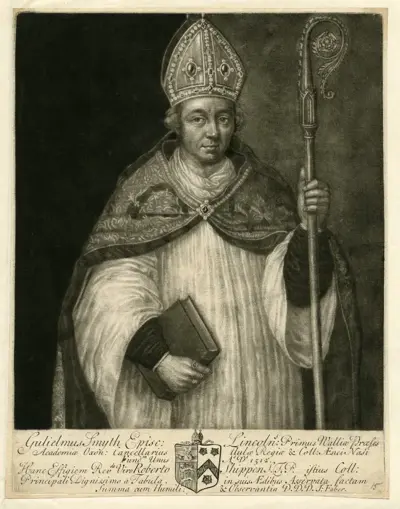
William Smyth (or Smith) was Bishop of Coventry and Lichfield from 1493 to 1496 and then Bishop of Lincoln until his death. He held political offices, the most important being Lord President of the Council of Wales and the Marches. He became very wealthy and was a benefactor of a number of institutions. He was a co-founder of Brasenose College, Oxford and endowed a grammar school in the village of his birth in Lancashire.
