Hannah More Quotes
Reformation must begin with the GREAT, or it will never be effectual. Their example is the fountain whence the vulgar draw their habits, actions, and characters. To expect to reform the poor while the opulent are corrupt, is to throw odors into the stream while the springs are poisoned.
Hannah More, 1745–1833, English Theologian, Writer, & Philanthropist, Thoughts on the Importance of the Manners of the Great to General Society
Sourced by: Eigen's Political and Historical Quotations


The hymn was officially removed from the Anglican Hymnal in 1963. The hymn is a good example if how Christianity was used to reinforce the status quo of a riged English class system. God ordained the position of all men and onky he could change that. Hard work, education, personal qualities were all for naught. And no one should question the fairness of the status quo, as it was God’s will.


This is also true in modern politics where almost all petitions and demonstrations are also the apprehension of loss of rights. This is true even when parties contest as in 2011 where the Tea Party and the Occupy Movement both were outraged that they were losing their rights, and in a different ways, both were.

This was the prevailing view in Europe at the time; it was less so in the United States, where there were so many people who owned their own land and farmed it or developed manufacturing facilities and hence were the mind AND the limbs of the enterprises. However, the upper classes tended to agree with the European view. The difference between the American and European views was one of class mobility. In America “limbs” who demonstrated capacities of “mind” were much more able to advance in America. However, even into the 21st century here was a general feeling of the upper class that the “minds” made the critical and impactful decisions. This is one of the reasons that executive and CEO pay advanced so rapidly when compared with workers (the “linbs”).

Millions of people were hungry. There was not enough wheat (they called it corn) to make up for the failed potatoes, and the aristocracy, the landlords, had a very high protective tariff to prevent American wheat from driving the prices down. The aristocrats would not budge on the “corn laws” so Victoria and her government appropriated funds to buy expensive English wheat to distribute to the needy. She also instituted some public employment so the unemployed would, as in the New Deal later, would work on public improvement. However, all administration went through the landlords who took large portions of the corn for the poor to pay themselves for the cost of distributing the corn to the needy. Then many landlords assigned the publicly paid workers to improvement projects on their own personal land. The Queen and Prince were furious and they began an effort that would repeal the Corn Laws and make England a free trading nation.


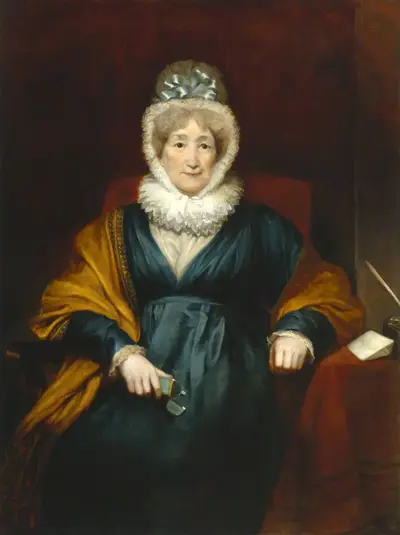
Hannah More was an English religious writer and philanthropist, remembered as a poet and playwright in the circle of Johnson, Reynolds and Garrick, as a writer on moral and religious subjects, and as a practical philanthropist. Born in Bristol, she taught at a school founded there by her father and began writing plays. She became involved with the London literary elite and was a leading Bluestocking member. Her later plays and poetry became more evangelical, and she joined a group campaigning against the slave trade. In the 1790s she wrote several Cheap Repository Tracts on moral, religious, and political topics for distribution to the literate poor (famously a riposte to Thomas Paine's Rights of Man). Meanwhile, she broadened her links with schools that she and her sister Martha had founded in rural Somerset. These modelled her strictures on the education of the poor, permitting a limited reading ability but no writing.
