Pierre Bayle Quotes
I am a citizen of the world: I serve neither the emperor nor the king of France; I am at the service of Truth; she is my only Queen.
The world citizenship notion was later articulated by Eugene V. Debs in 1914.
Pierre Bayle, 1647-1706, French Philosopher & Writer, Dictionnaire historique et critique, s.v. "Usson," 1697
Sourced by: Eigen's Political and Historical Quotations


Ataturk was one of the few revolutionary leaders who appreciated the importance of maintaining a Republic over time and allowed for the possibility that the revolutionary government might become corrupt. So like Thomas Jefferson, he always told citizens to be ever vigilant. In the case of Turkey, on several occasions fundamentalist religious forces have attempted to regain control of the secular republic and the government and mindful of Ataturk’s warnings the Army and other forces have rallied to keep Turkey independent and secular.


Ultranationalist Secret Organization. Unlike the Italian Black hand for whom it was named, the Serbs were not interested in money. The were a right wing death squad that assassinated all who opposed a single, unitary, Serbian nation. Dimitrijevic was executed in 1917.

Compare to the language of Jefferson in the Declaration of Independence. Jefferson and his colleagues were familiar with this document.


If men's minds were as easily controlled as their tongues, every king would sit safely on his throne
Spinoza’s ideas were considered so radical and dangerous that he was the only man in history who was excommunicated by the Catholics, the Jews and the Muslims.


This quotation was very prophetic. In 1952, the Supreme Court upheld the doctrine of dual citizenship {629249} and hundreds of thousands of Americans now carry dual citizenship.

At the beginning of the 21st century, the pledge became a matter of controversy. The Queen was the Queen of England, and many Australians were secular and objected to the reference to God. Only the flag remained uncontroversial.
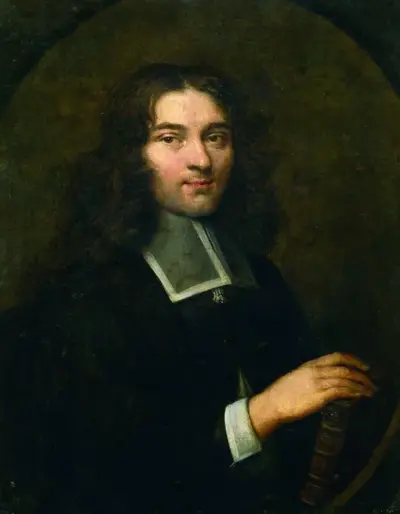
Pierre Bayle was a French philosopher, author, and lexicographer. A Huguenot, Bayle fled to the Dutch Republic in 1681 because of religious persecution in France. He is best known for his Historical and Critical Dictionary, whose publication began in 1697. Bayle was a notable advocate of religious toleration and his skeptical philosophy had a significant influence on the subsequent growth and development of the European Age of Enlightenment. Bayle is commonly regarded as a forerunner of the Encyclopédistes of the mid 18th century.
