Randolph Bourne Quotes
We may have to accept some form of that dual citizenship which meets with so much articulate horror among us. Dual citizenship we may have to recognize as the rudimentary form of that international citizenship to which, if our words mean anything, we aspire. We have assumed unquestioningly that mere participation in the political life of the United States must cut the new citizen off from all sympathy with his old allegiance. Anything but a bodily transfer of devotion from one sovereignty to another has been viewed as a sort of moral treason against the Republic.
This quotation was very prophetic. In 1952, the Supreme Court upheld the doctrine of dual citizenship {629249} and hundreds of thousands of Americans now carry dual citizenship.
Randolph Bourne, 1886–1918, Social & Political Essayist, “Trans-National America”, The Atlantic Monthly, July 1916
Sourced by: Eigen's Political and Historical Quotations


The requirement for citizenship required the applicant to petition—make a true declaration. The issues of that day that Americans were concerned about were anarchy, polygamy, and loyalty to other nations. A century later, terrorism has taken the place of anarchy as the major concern. Polygamy is no longer an issue, and America allowed citizens to have dual citizenships with many other counties.


Austin renounced his American citizenship and committed himself to Mexico where he was recruiting American emigrants for settlement in what is now Texas as a Mexican territory. Later, he grew disillusioned with the Mexican government and chose Texas independence.


His wife also had a Doctorate in Chemistry—the 2nd woman to achieve that in Germany—and she was distraught that he had been the leading scientist developing not only the poison gas which the Germans introduced in WWI, but he also developed the tactics of use and personally went to the battlefield and supervised the first major gas attacks. This was much against the ethical value of most scientists and Jewish ethics in particular. Haber had been a close colleague of Albert Einstein and the Kaiser Wilhelm Institute, and while Einstein was trying to get scientists to sign a petition against the war, Haber was developing the first weapon of mass destruction. After Haber gave this response to his wife, we left to go to the front to supervise another major gas attack. His wife committed suicide. Haber, while a German national hero to militaristic Germany, never again had the kind of pre-war relationship that existed with Einstein and many other fellow scientists.


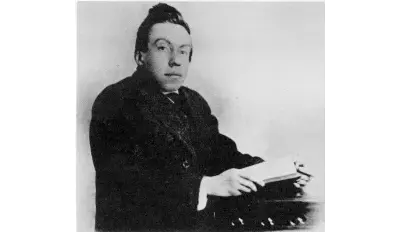
- Born: May 30, 1886
- Died: December 22, 1918
- Nationality: American
- Profession: Writer
Randolph Silliman Bourne was a progressive writer and intellectual born in Bloomfield, New Jersey, and a graduate of Columbia University. He is considered to be a spokesman for the young radicals living during World War I. His articles appeared in journals including The Seven Arts and The New Republic. Bourne is best known for his essays, especially his unfinished work "The State," discovered after he died. The essay is the source of the well-known phrase "war is the health of the state," by which Bourne lamented governments' success at arrogating authority and resources during conflicts.
