Stephen Douglas Quotes
Every man must be for the United States or against it. There can be no neutrals in this war; only patriots and traitors.
Douglas, Stephen A. "Speech at Chicago, Illinois, May 1, 1861." Stephen A. Douglas: His Life, Public Services, Speeches and Patriotism, by Clark E. Carr, A. C. McClurg & Co., 1909, p. 138.


His wife also had a Doctorate in Chemistry—the 2nd woman to achieve that in Germany—and she was distraught that he had been the leading scientist developing not only the poison gas which the Germans introduced in WWI, but he also developed the tactics of use and personally went to the battlefield and supervised the first major gas attacks. This was much against the ethical value of most scientists and Jewish ethics in particular. Haber had been a close colleague of Albert Einstein and the Kaiser Wilhelm Institute, and while Einstein was trying to get scientists to sign a petition against the war, Haber was developing the first weapon of mass destruction. After Haber gave this response to his wife, we left to go to the front to supervise another major gas attack. His wife committed suicide. Haber, while a German national hero to militaristic Germany, never again had the kind of pre-war relationship that existed with Einstein and many other fellow scientists.


Kahn was killed by an American Drone Strike in Yemen in 2011. Inspire Magazine was an Online Magazine Al Qaeda produced.


“Lord Haw Haw” was the name that he used in his propaganda broadcasts from Germany to England. Despite the fact that the broadcasts were anti-British and pro German, many in Britain listened to him regularly. He was very witty and many of his criticisms of British society were views held by many patriots in Britain. As pure entertainment, he was better than most of the BBC broadcasts during WWII. At the end of the war, Joyce was captured, tried and executed for treason.
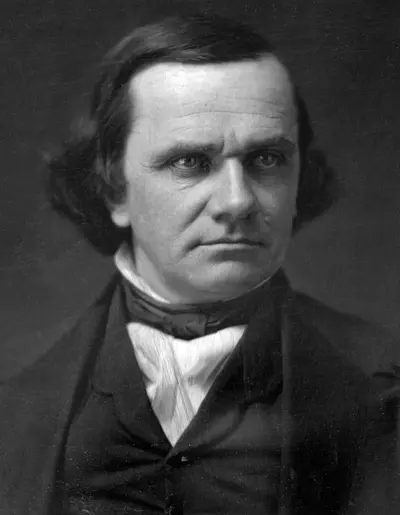
Stephen Arnold Douglas was an American politician and lawyer from Illinois. He was one of two Democratic Party nominees for president in the 1860 presidential election, which was won by Republican Abraham Lincoln. Douglas had previously defeated Lincoln in the 1858 United States Senate election in Illinois, known for the Lincoln–Douglas debates. During the 1850s, Douglas was one of the foremost advocates of popular sovereignty, which held that each territory should be allowed to determine whether to permit slavery within its borders. Douglas was nicknamed the "Little Giant" and "Stevie D" because he was short in physical stature but a forceful and dominant figure in politics.
