Ulysses S. Grant Quotes
From here on there will be two kinds of men—traitors and patriots. I prefer to be associated with the latter.
Ulysses S. Grant, 1822-1885, Commanding General of the Union Army, 18th President of the United States (Republican, OH), Statement after Fort Sumter was fired upon, Quoted on PBS, The American Experience: Grant, January 10, 2011
Sourced by: Eigen's Political and Historical Quotations


He had been mortally wounded in battle and asked the Duc de Bourbon to prop him up against a tree facing the enemy. Then enemy army was French also but abandoned the cause of the French King to fight with the more powerful Holy Roman Emperor, Charles V. He was only going to die, but the enemy would remain traitors for ever. This was typical of the code of the Knights of which he is sometimes referred to as the Last of the Knights.


Joseph Addison had earlier written of such a situation. Recent research has strongly suggested that Hale may never have said these words. The American patriots wanted to have heroes and may not have been too worried about the documentation and historical research. See {621112}


Ataturk had been a military hero, but was very much opposed to war and military adventurism not unlike the Dwight Eisenhower and Colin Powell type leaders. However, the one thing that he thought worth the sacrifice of his own and other Turkish lives was Turkish independence and sovereignty. Historically, the Ottoman Empire which Ataturk finally ended, had dominated half of Europe and all of the Mid East at the cost of sovereignty of other nations and Ataturk saw no more important virtue with dying for than national sovereignty. See {125322} and {584501}.

Recipient of the National Security Medal
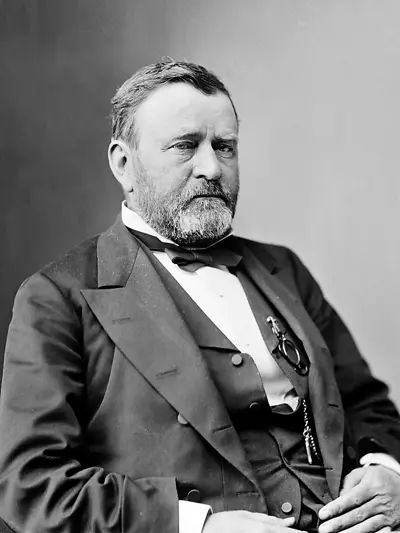
Ulysses S. Grant was an American military leader who served as the 18th president of the United States from 1869 to 1877. As president, Grant was an effective civil rights executive who created the Justice Department and worked with the Radical Republicans during Reconstruction to protect African Americans. As Commanding General, he led the Union Army to victory in the American Civil War in 1865 and thereafter briefly served as Secretary of War.
