Ernest Hemingway Quotes
I've seen a lot of patriots and they all died just like anybody else if it hurt bad enough and once they were dead their patriotism was only good for legends; … If you are going to be a great patriot, i.e., loyal to any existing order of government (not one who wishes to destroy the existing for something better), you want to be killed early if your life ....
Ernest Hemingway, 1899–1961, Nobel Laureate in Literature, Letter, January 12, 1936
Sourced by: Eigen's Political and Historical Quotations


Ataturk had been a military hero, but was very much opposed to war and military adventurism not unlike the Dwight Eisenhower and Colin Powell type leaders. However, the one thing that he thought worth the sacrifice of his own and other Turkish lives was Turkish independence and sovereignty. Historically, the Ottoman Empire which Ataturk finally ended, had dominated half of Europe and all of the Mid East at the cost of sovereignty of other nations and Ataturk saw no more important virtue with dying for than national sovereignty. See {125322} and {584501}.

Compare Nathan Hale's last words.

Joseph Addison had earlier written of such a situation. Recent research has strongly suggested that Hale may never have said these words. The American patriots wanted to have heroes and may not have been too worried about the documentation and historical research. See {621112}


Even as he was being executed for his many war crimes, the Field Marshal exhibited the mental perspective of Germanic patriotism that had brought Europe as well as Germany itself so much death and ruin.

This quotation is often incorrectly given as “Patriotism is the religion of Hell.”

The Poles were fighting the Russians. Pulaski was a Field Marshall. This was before he had come to America and fought in the American Revolution.


Saloth Sar Pol Pot. He was responsible for the brutal killing of over 1 million of his own people.


Quintus Horatius Flaccus

For variations on this theme see Stephen Decatur, Meyer London, Charles Churchill and Carl Schurtz

Quintus Horatius Flaccus. This famous quotation has been echoed in virtually every language and every country of the world. However, see Ernest Hemingway for a counter view.


Bassi was one of the unique military chaplains in history. Instead of just ministering to the men spiritually, he marched at the head of the Italian revolutionary Army and was wounded in combat. Although he never carried arms, he was executed along with those who did.


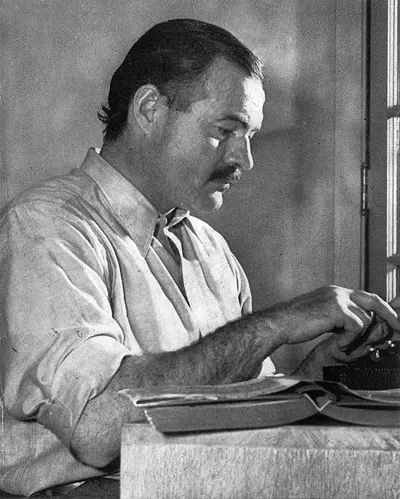
Ernest Miller Hemingway was an American novelist, short-story writer, journalist, and sportsman. His economical and understated style—which he termed the iceberg theory—had a strong influence on 20th-century fiction, while his adventurous lifestyle and his public image brought him admiration from later generations. Hemingway produced most of his work between the mid-1920s and the mid-1950s, and he was awarded the Nobel Prize in Literature in 1954. He published seven novels, six short-story collections, and two nonfiction works. Three of his novels, four short-story collections, and three nonfiction works were published posthumously. Many of his works are considered classics of American literature.
