Bertrand Russell Quotes
Patriotism is the willingness to kill and be killed for trivial reasons.


This quotation is often incorrectly given as “Patriotism is the religion of Hell.”


Ataturk had been a military hero, but was very much opposed to war and military adventurism not unlike the Dwight Eisenhower and Colin Powell type leaders. However, the one thing that he thought worth the sacrifice of his own and other Turkish lives was Turkish independence and sovereignty. Historically, the Ottoman Empire which Ataturk finally ended, had dominated half of Europe and all of the Mid East at the cost of sovereignty of other nations and Ataturk saw no more important virtue with dying for than national sovereignty. See {125322} and {584501}.


Joseph Addison had earlier written of such a situation. Recent research has strongly suggested that Hale may never have said these words. The American patriots wanted to have heroes and may not have been too worried about the documentation and historical research. See {621112}


Quintus Horatius Flaccus

Compare Nathan Hale's last words.

Saloth Sar Pol Pot. He was responsible for the brutal killing of over 1 million of his own people.


The Poles were fighting the Russians. Pulaski was a Field Marshall. This was before he had come to America and fought in the American Revolution.

Even as he was being executed for his many war crimes, the Field Marshal exhibited the mental perspective of Germanic patriotism that had brought Europe as well as Germany itself so much death and ruin.

Quintus Horatius Flaccus. This famous quotation has been echoed in virtually every language and every country of the world. However, see Ernest Hemingway for a counter view.


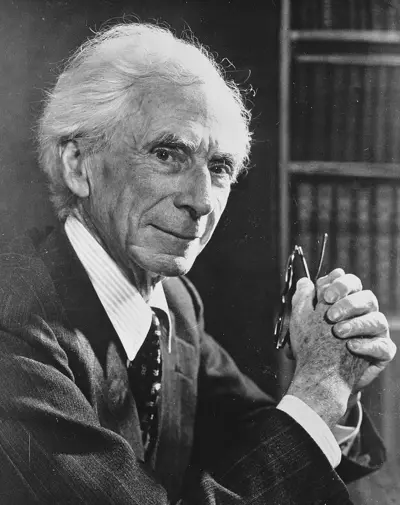
Bertrand Arthur William Russell, 3rd Earl Russell OM FRS was a British polymath, philosopher, logician, mathematician, historian, writer, social critic, political activist, and Nobel laureate. Bertrand Russell was one of the most influential and widely known intellectual figures of the twentieth century. In 1950 he was awarded the Nobel Prize in Literature for his extensive contributions to world literature and for his “rationality and humanity, as a fearless champion of free speech and free thought in the West.“
