Edwin A. Walker Quotes
In patriotism, loyalty, and combat, there are no moderates.
Edwin A. Walker, 1909-1993, U. S. Army General, Member, The John Birch Society, Republican Candidate for Governor of Texas, Campaign Speech, 1962
Sourced by: Eigen's Political and Historical Quotations


Ataturk had been a military hero, but was very much opposed to war and military adventurism not unlike the Dwight Eisenhower and Colin Powell type leaders. However, the one thing that he thought worth the sacrifice of his own and other Turkish lives was Turkish independence and sovereignty. Historically, the Ottoman Empire which Ataturk finally ended, had dominated half of Europe and all of the Mid East at the cost of sovereignty of other nations and Ataturk saw no more important virtue with dying for than national sovereignty. See {125322} and {584501}.

Even as he was being executed for his many war crimes, the Field Marshal exhibited the mental perspective of Germanic patriotism that had brought Europe as well as Germany itself so much death and ruin.

Quintus Horatius Flaccus


Bassi was one of the unique military chaplains in history. Instead of just ministering to the men spiritually, he marched at the head of the Italian revolutionary Army and was wounded in combat. Although he never carried arms, he was executed along with those who did.


Quintus Horatius Flaccus. This famous quotation has been echoed in virtually every language and every country of the world. However, see Ernest Hemingway for a counter view.

This quotation is often incorrectly given as “Patriotism is the religion of Hell.”


In one of the most unusual revolutions in world history, Brazil became independent from Portugal via a revolution led by the son of the Portuguese King and heir to the throne, Pedro I. The crown prince of Portugal, led Brazil in her breakaway from Portugal and by popular acclaim became Pedro I, Emperor of Brazil. He is probably the only monarch in history who was the heredity monarch of one kingdom and selected by popular acclaim to the throne of another.


The Poles were fighting the Russians. Pulaski was a Field Marshall. This was before he had come to America and fought in the American Revolution.

Compare Nathan Hale's last words.


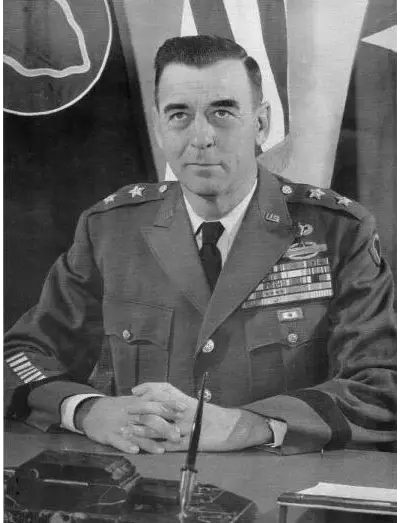
Edwin Anderson Walker — known as Ted Walker — was a United States Army officer who served in World War II and the Korean War. He became known for his staunch conservative political opinions and was criticized by U.S. President Dwight D. Eisenhower for promoting a personal political opinion while in uniform. Walker resigned his commission in 1959, but Eisenhower refused to accept his resignation and gave Walker a new command of the 24th Infantry Division in Augsburg, Germany. Walker again resigned his commission in 1961 after being publicly and formally admonished by the Joint Chiefs of Staff for allegedly referring to Eleanor Roosevelt and Harry S. Truman as "pink" in print and for violating the Hatch Act of 1939 by attempting to influence the votes of his troops. President John F. Kennedy accepted his resignation, making Walker the only US general to resign in the 20th century.
