E. W. Howe Quotes
How the Russian revolutionists loved each other before they had anything to divide!
Edgar Watson Howe, 1853-1937, Editor & Writer, Ventures in Common Sense, Knopf, 1919
Sourced by: Eigen's Political and Historical Quotations


There was an attempt by some Libyans to attack a Libyan student at an American University who was an outspoken critic of the Qaddafi regime.

Durruti’s and other Republican columns were advancing on Saragossa on the Aragon front to free it from the Fascists. Durruti’s army was made up of idealist libertarians and anarchists who also didn’t much like straight communists because they would restrict individual freedom. The regular communist army was more conservative and wanted to coordinate and attack and wait for planning and more coordination between the columns. The libertarians pushed ahead with the others following and they took Saragossa

Rival to Mao. This quotation is historically important because it shows how intensively the Chinese Communists concentrated on organizing the fringe and unpopular groups of society to the point where the struggle was between Chiang Kai-shek’s Nationalists and everybody else. The Chinese Communist coalition included many who had not idea of what communism was but knew that Chiang Kai-shek and the Nationalists were not very good for them or the people they knew.


The Menshevik Party was the Communist Opposition to the Bolshevik Party. Unlike the Mensheviks, the Bolsheviks seized as much power as they could and then denied anyone else a share.

A month later the people revolted against the Communist Party and Ceausescu and his wife were executed.


The non-communist forces of China were always struggling with each other for power. Attempts by non-communist reformers were defeated by autocrats, warlords, major landlords, and various religions organizations and denominations which were all fighting each other.

Lenin, Uritsky, and other Bolshevik leaders were attacked in 1918. Lenin was wounded but Utrtsky died, and this triggered the attacks on the other Russian factions by the Bolsheviks known as the “Red Terror.”


Although he was a Marxist, he was also a democrat. He was one of the first leftists to criticize the Russian Revolution. The letter was widely published. There were few left wing intellectuals who would take Lenin on at the time but Gorter was one.


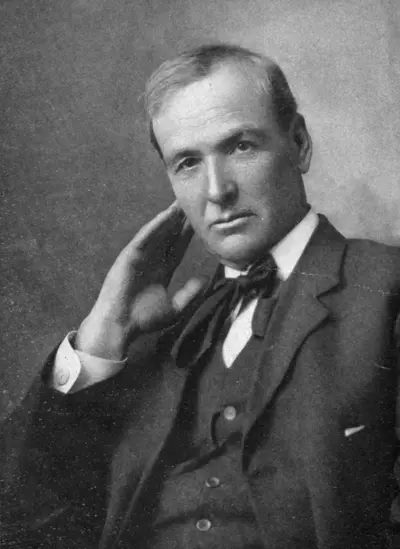
Edgar Watson Howe, was an American novelist and newspaper and magazine editor in the late 19th and early 20th centuries. He was perhaps best known for his magazine, E.W. Howe's Monthly. Howe was well traveled and known for his sharp wit in his editorials.
