Anthony Principi Quotes
History is littered by cases where veterans have destabilized society after feeling that they had been taken for fools.
In 1924 Congress voted a bonus to all veterans but refused to pay it until 1945. With the privation of the Depression, 15,000 poverty stricken veterans marched on Washington, and set up camps. The Army, under General Douglas MacArthur with George Patton leading the Calvary, attacked the protesters camp and burned them out injuring many. President Hoover got the blame but MacArther did not obey Hoover’s orders not to cross the bridge to the camp. He was in character as was his aide Major Dwight D. Eisenhower who tried to dissuade MacArthur from attacking but to no avail.
Anthony Principi, Secretary of Veterans Affairs (Republican), Forward to a Book on the History of the Veterans Bonus March, 2004
Sourced by: Eigen's Political and Historical Quotations

Veterans of WWI had been authorized a bonus by Congress, and had been issued certificates, but Congress had not appropriated the money to redeem the certificates. Veterans of World War I formed a “Bonus Army,” some twenty thousand unemployed veterans and a like number of family members arrived in Washington DC with their hurting families and sett up a shantytown across the river from Capitol Hill. They demanded of Congress their bonus pay. Instead President Hoover castigated them and authorized the U. S. Army to disperse the veterans. General Douglas MacArthur commanded the troops and in one of the great disgraces of the United States, he used excessive force, MacArthur attacked women and children with infantry, cavalry and tanks. Governor Bartlett was in Washington at the time and became an eye witness in an era where there was no television.

After WWII there was much focus on the Military Justice System which was much in need of reform and modernization.


This general perception led the Founding Fathers to place profound restrictions on the allowable role of the military in national law enforcement—a condition that exists to this day.

World War I veterans had been promised bonuses for their service, but Congress and the President would not deliver. The economy was terrible and thousands of veterans came to Washington, set up a camp in Anacostia, and asked for help and their bonuses. Hoover had given orders to General Douglas MacArthur to remove the protesters from government buildings, but MacArthur, establishing a pattern that he would follow throughout his career, exceeded he orders and chased the protesters all the way back to their tent camp and then destroyed the camp. The Great Depression was raging and the protesters had no other place to live, and Hoover opposed any direct federal aid to the poor and needy making the Depression even worse. The public reaction was shock and anger. Hoover, however, demonstrating political character and integrity, took the responsibility and did not blame MacArthur. It was the nail in Hoover’s political coffin. Roosevelt easily won the election.
Lincoln had instituted the first draft in American History and it was terribly resented by many Americans. The draft laws allowed the wealthy and upper middle class to avoid service by paying a $300 fee of hiring a substitute just like in the Vietnam War the upper classes could get College Draft deferments. The mob led mostly by poor Irish, began by protesting the draft; then they attacked the mansions and houses of the wealthy; and then they went after Blacks. The Irish poor feared large numbers of Negroes coming out of slavery and competing for their jobs and lowering the prevailing wages. Blacks were beaten and lynched and 5,000 almost half of the then Negro population were driven to Brooklyn, New Jersey and the New York suburbs. It was the worst riot in United States History.

By producing growth and an increasing standard of living and universal education, capitalism’s citizens have the time, education, and resources to protest and produce social unrest. However, that assumes that there is also a democratic state. For Schumpeter and many others, capitalism and democracy go hand in hand, but many point to historical examples of one developing faster than the other.

Outside the convention, there were demonstrations against the Vietnam War. The Police of Chicago under the direction of Mayor Daily tried to break up the demonstrations and created what the Kener investigation called a “police riot.” The techniques the Chicago police used were those similar to those of dictatorships and many of the delegates could see what was really going on outside via TV sets in their hotel rooms.


The Mothers of the Plaza de Mayo silently marched every week asking what had happened to the children—the disappeared—who were kidnapped and murdered in the Argentine Dirty War. The President warned the crowd that their protests might attract the death squads again.

The general had reported to the Czar that he had peacefully dissipated a protesting mob without firing a shot. The Czar felt that the absence of shooting and killing protesters would simply encourage more protests. See {613675}.

Most of the Southern racist members of Congress really did see any demonstration for civil rights as a threat—a threat to the Southern white way of life. And the threat was that most fair minded Americans would be exposed to the evils of segregation and pass Civil Rights legislation. Most of the other members of Congress totally rejected this explanation of why the legislation was being debated. See {637396} .
They almost certainly did when they put down some protests / demonstrations during the Arab Spring. Sophisticated allies point out that the United States (Ohio National Guard) troops that killed the peaceful anti-Vietnam War protesters did so with American made weapons.

The Confederate Civilian & Military Authorities in the Confederate Capital were grossly insensitive to the perceptions and opinions of the women of the South. This statement was a classic example. It also indicates the terribly serious plight the Confederacy was in at the time. Just as the leadership deluded themselves into thinking that the women of Richmond would riot and loot for “license ” and not for shortage and want of necessities, they did not face the reality of their strategic military situation.


Armenia has no tradition for freedom of speech and assembly, and little respect for Human Rights. This quotation illustrates what many of our American lawmakers were concerned with when they prohibited the military from being used domestically against civilians. When a national Guard Unit is called up, the Pentagon no longer controls the soldier but the State Governor and his State National Guard Commander have the command and control.
The Federal Fugitive Slave Act required all in free states to assist owners of escaped slaves to return them to their owners. See realted quotations.


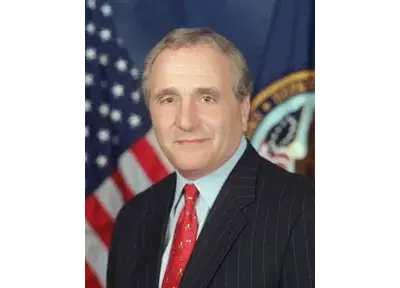
Anthony Joseph Principi is the former United States Secretary of Veterans Affairs. He was appointed by President George W. Bush on January 23, 2001, and resigned on January 26, 2005. He Chaired the 2005 Defense Base Closure and Realignment Commission, BRAC and is currently serving as a Consultant & Board member of several diverse Foundations & Corporations.
