Paul Keating Quotes
He's a pre-Copernican obscurantist
Paul Keating, Australian Prime Minister (Labor), Referring to Prime Minister John Howard's attitude to industrial relations. Australian Broadcasting Corporation, Radio interview, May 1, 2007
Sourced by: Eigen's Political and Historical Quotations


The Church no longer believes this of course. Having learned from this unfortunate experience and Galileo’s persecution, today the Roman Catholic Church is one of the more advanced religious institutions in accepting modern science.

This was an observation and statement that made many conservatives unhappy with a figure who was usually their hero. However, Mises observed correctly, that any reactionary is supporting and defending what he/she perceives is the best of the past. But by definition the ideas are of the past and are the intellectual product of others. Therefore the ideas she espouses are never hers. The reactionary is intellectual dependent on the past. In contrast, liberals, progressives and radicals MIGHT be intellectually independent. A few are, but most echo their ideas. But the reactionary can never be intellectually independent.

Harding was not the brightest bulb on the political scene but was a very affable and personable man.

We have government by the clueless, over a place they’ve never been, using means they don’t possess.
Describing government attempts to regulate the Internet and other electronic communications:


Referring to British Prime Minister Stanley Baldwin:


Taft was not unintelligent. He was actually quite bright which is one of the reasons that TR selected him as VP and supported Taft for President in 1908. Taft did have an aversion to confrontation and political battle, and he was unable deal with the conservatives of his Party to maintain some independence and continue the TR progressive reforms. Roosevelt, who had been a very close friend of Taft, was disillusioned with the Taft Presidency and ran against him in the 1912 Republican Primary.

Holy Roman Emperor Frederic II

This is a particularly interesting contemporary passage about the early Christians. Unlike many who despised the Christians, or thought them dangerous to society, Lucian was an intellectual of his era. He saw the Christians as naïve, ignorant, bumpkins, who could be taken advantage of by unscrupulous people.


See {620027} for an example of Feith’s logic.


Trump was a very wealthy businessman and celebrity who had flirted with running for the Republican nomination for President. He then supported Mitt Romney, but continued with his birther accusations against President Obama. The Birthers were extremists and any racists who perpetrated the absurd story that Obama was born in Kenya and not in Hawaii where his family insists he was born, where the local newspapers at the tie report his birth, where his birth certificate shows he was born, where the local hospital records show he was born. Trump made it very difficult for Romney who was embarrassed because a major supporter was uttering such nonsense, but also because, although a small minority of “crazies”, the birthers were all activists in Romney’s Conservative Republican base and Romney was vigorously courting that base.


Most scientists do not have the skill or the totality of knowledge to accurately predict the effect of scientific research and learning on society. Many are not interested. Those who try to communicate with politicians and the public are usually met with indifference or suspicion. Above all, the scientific and mathematical literacy of the public is so weak, that it is impossible in much of science to even explain the science to the lay public much less explain its implications. Soddy was a bit of an idealist from a class society and he felt the upper classes should be better informed by scientists.


Czar Nicholas II was a relative of Queen Victoria and her uncle, King Leopold. They were both skilled and popular monarchs. In contrast, the Czar was not only hated by his own people, but as this private letter shows, was not thought very well of by his own more accomplished relatives and fellow monarchs. Nicholas II was so bad, that he was the last of the Czars as the Communist Russian Revolution forced him to abdicate and then he was murdered.

In Australia, the Liberal Party is a right wing conservative party, unlike England or the United States.

Many in Congress were afraid of McCarthy as he would charge that anyone who criticized him was a Communist or Communist Sympathizer. Young John F. Kennedy was one of those who was intimidated into silence. Fulbright was one of the few who had the courage to take McCarthy on. Later, McCarthy was censured by the Senate and it afterwards it was revealed that he was a paranoid alcoholic but he did a tremendous amount of damage.
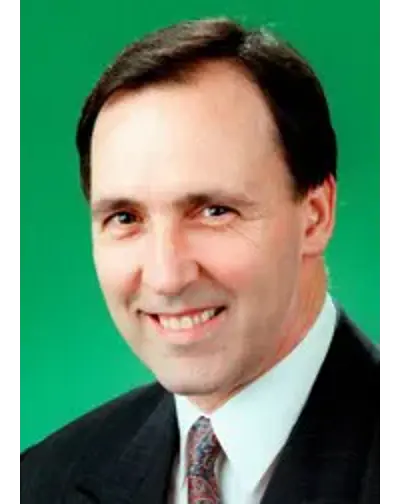
Paul John Keating is an Australian politician who served as the 24th Prime Minister of Australia and the Leader of the Labor Party from 1991 to 1996. He previously served as Treasurer of Australia in the Hawke Government from 1983 to 1991 and as Deputy Prime Minister of Australia and Deputy Leader of the Labor Party from 1990 to 1991.
