Victor Hugo Quotes
We know the clerical party; it is an old party. This it is which has found for the truth those two marvelous supporters, ignorance and error. This it is which forbids to science and genius the going beyond the Missal and which wishes to cloister thought in dogmas.
Victor Hugo, 1802-1885, French Writer, Member of the Constituent Assembly & the National Assembly at Bordeaux, Quoted in John E. Remsberg, The Christ
Sourced by: Eigen's Political and Historical Quotations


He was an overt atheist; there were many non believers in Europe at the time but few were overt. He also wrote under the name of Jean Baptiste de Mirabaud.

Huqqani was specifically referring to Muslim religious scholars, but his point is more general and applies equally to some religious scholars and clerics of Christian, Jewish, Buddhist and other persuasions.

Some scientists are religious believers. Many are not. However, relatively few hold the position that Dawkins does that religion is and has been an evil force in the world. These argue that religions and religious factionalism has caused as many deaths as epidemics and pandemics and is an evil for society. While that argument has been historically true in much of the world, religious conflict deaths has actually decreased in frequency over the last century and may be at a world-wise low as a percentage of the world population. With the exception of Islamic fundamentalist extremism, there is no religious group that advocates religious violence and has a majority of any country. Moderate Muslims have never before been in greater numbers, so it can be argued that modern society and most religions have been reforming themselves over the years.

The classic dilemma is that religious moderates and scientists do not argue to force everyone to follow the dictates of science, but in almost all societies and nations, religious fundamentalists strive to force their beliefs on all and make disagreement illegal.

He was too ill to read the speech himself and it was read by James Wilson for him.
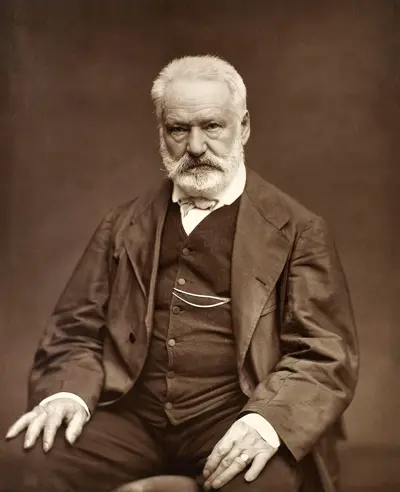
Victor-Marie Hugo was a French poet, novelist, and dramatist of the Romantic movement. During a literary career that spanned more than sixty years, he wrote abundantly in an exceptional variety of genres: lyrics, satires, epics, philosophical poems, epigrams, novels, history, critical essays, political speeches, funeral orations, diaries, letters public and private, as well as dramas in verse and prose.
