Harriet Martineau Quotes
I would not exchange my freedom from old superstition, if I were to be burned at the stake next month, for all the peace and quiet of orthodoxy, if I must take the orthodoxy with peace and quiet.
Harriet Martineau, 1802-1876, British Economist & Reformer, Letter, February 1848
Sourced by: Eigen's Political and Historical Quotations

This quote is known as “Neuhaus’ Law.”


In 1877 Wasburn was dropped from the List of Ministers by the Unitarian Church. He had become quite atheistic.


This is an excellent quotation to illustrate the differences that exist over what is right and wrong and what is a sin. Smith is very clear that there are differences.

Islamic modernists like Serageldin are many among the educated Muslims but their views are often drowned out by the violence and extremist statements of the fundamentalists.

Some scientists are religious believers. Many are not. However, relatively few hold the position that Dawkins does that religion is and has been an evil force in the world. These argue that religions and religious factionalism has caused as many deaths as epidemics and pandemics and is an evil for society. While that argument has been historically true in much of the world, religious conflict deaths has actually decreased in frequency over the last century and may be at a world-wise low as a percentage of the world population. With the exception of Islamic fundamentalist extremism, there is no religious group that advocates religious violence and has a majority of any country. Moderate Muslims have never before been in greater numbers, so it can be argued that modern society and most religions have been reforming themselves over the years.


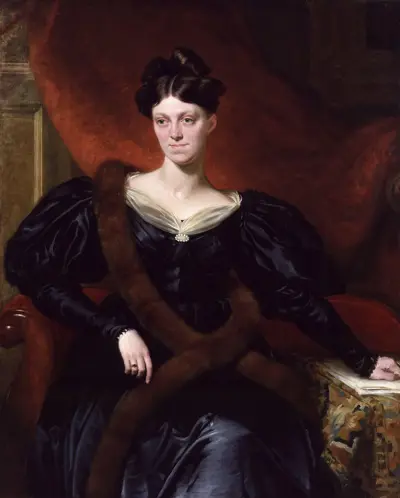
Harriet Martineau was an English social theorist and Whig writer often seen as the first female sociologist. She wrote many books and essays from a sociological, holistic, religious, domestic and feminine perspective, translated works by Auguste Comte, and earned enough to support herself by writing, a rare feat for a woman of her period. The young Princess Victoria enjoyed reading her and invited her to her coronation in 1838. Martineau said of her approach, "One must focus on all [society's] aspects, including key political, religious, and social institutions." She believed thorough analysis was needed to understand women's status under men. The novelist Margaret Oliphant said "as a born lecturer and politician... less distinctively affected by her sex than perhaps any other, male or female, of her generation."
