James Buchanan Quotes
I have seldom met an intelligent person whose views were not narrowed and distorted by religion.
James Buchanan, 1791-1868, 15th President of the United States (Democrat, PA), Quoted in Rufus K. Noyes, Views of Religion
Sourced by: Eigen's Political and Historical Quotations


Some scientists are religious believers. Many are not. However, relatively few hold the position that Dawkins does that religion is and has been an evil force in the world. These argue that religions and religious factionalism has caused as many deaths as epidemics and pandemics and is an evil for society. While that argument has been historically true in much of the world, religious conflict deaths has actually decreased in frequency over the last century and may be at a world-wise low as a percentage of the world population. With the exception of Islamic fundamentalist extremism, there is no religious group that advocates religious violence and has a majority of any country. Moderate Muslims have never before been in greater numbers, so it can be argued that modern society and most religions have been reforming themselves over the years.
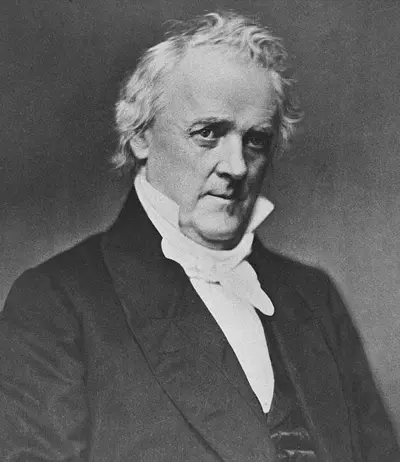
James Buchanan, Jr. was the 15th President of the United States (1857–61), serving immediately prior to the American Civil War. He represented Pennsylvania in the United States House of Representatives and later the Senate, then served as Minister to Russia under President Andrew Jackson. He was named Secretary of State under President James K. Polk, and as of 2016[update] is the last former Secretary of State to serve as President of the United States. After Buchanan turned down an offer to sit on the Supreme Court, President Franklin Pierce appointed him Ambassador to the United Kingdom, in which capacity he helped draft the Ostend Manifesto.; James McGill Buchanan, Jr. was an American economist known for his work on public choice theory (included in his most famous work The Calculus of Consent), for which he received the Nobel Memorial Prize in 1986. Buchanan's work initiated research on how politicians' and bureaucrats' self-interest, utility maximization and other non-wealth maximizing considerations affect their decision making. He was a member of the Board of Advisors of The Independent Institute, a member (and for a time the President) of the Mont Pelerin Society, a Distinguished Senior Fellow of the Cato Institute, and professor at George Mason University.
