Harry J. Anslinger Quotes
Here we have drug that is not like opium. Opium has all of the good of Dr. Jekyll and all the evil of Mr. Hyde. This drug is entirely the monster Hyde, the harmful effect of which cannot be measured. Some people will fly into a delirious rage, and they are temporarily irresponsible and may commit violent crimes. Other people will laugh uncontrollably. It is impossible to say what the effect will be on any individual. Those research men who have tried it have always been under control. They have always insisted upon that. … It is dangerous to the mind and body, and particularly dangerous to the criminal type, because it releases all of the inhibitions.
This testimony was so absurd that we look at it with humor today. But tragically, he was the highest narcotics officer in the government . He actually believed that marijuana was a more dangerous drug than opium without the medicinal benefit of opium.
Harry J. Anslinger, 1892-1975, U. S. Commissioner of Narcotics, Congressional Testimony, April 1937
Sourced by: Eigen's Political and Historical Quotations


Actually, The Surgeon General has explained that alcohol has been the most violence-inducing drug. There is no evidence whatsoever that marijuana causes violence.

This quotation brought him much ridicule. See {585947}. Clinton was of the swing era where there were very negative public views about the morality of using illicit drugs and the character of those who might have used it. So Clinton felt constrained to emphasize that it was only marijuana, the most popular and benign of the illicit drugs, and to emphasize the fact that he did not enjoy it. His successor, however George W. Bush, had been an alcoholic and a heavy cocaine user, but learning from the Clinton error, would never comment about it other than to say that it was wrong and he urged all to avoid drugs.

Hearst personally wrote all the anti-drug editorials of his newspapers.
This type of statement made by otherwise respectable government officials has developed a view on the part of many Americans that the Government lies about marijuana. See {617560} and {593333} .

He was the first Chinese official to make opium illegal. However, British many merchants were involved in a complicated trade scheme whereby they brought opium to Canton. They paid not attention to the new laws against opium the same as their Chinese customers. Lin Zexu, perceiving Queen Victoria to have powers equivalent to the Chinese Emperor who could do anything in China, He assumed that the Queen could and would control the merchant’s behavior, and before punishing the British merchants, he was putting the Queen on notice. There is no record of what Victoria did, if anything. When Lin Zexu tried to enforce his ban on opium, the British Merchants resisted and the First Opium War broke out between China and Britainin which the Chinese were humiliated and resent to this day. A bronze statue of Lin Zexu was erected in his honor in Chatham Square (Kimlau Square) of New York City's Chinatown.

Marijuana was and still is a health and social problem in that people who tend to use it---especially young people---tend not to focus on their friendships, their work and study obligations, their own development and welfare. However it is nowhere near the degree of deleterious problems of alcohol and other drugs like heroin, cocaine, and methamphetamine. There is no record of anyone dying from an over dose or marijuana while alcohol and other drugs kill hundreds if not thousands a year. But none of those health emergencies compare with the flu which each year kills over 20,000 Americans who do not get inoculations or highway crashes which kill about 50,000. Yet Nixon did not characterize these as “national emergencies.”

British merchants and the East India Company made huge profits from the drug trade buying opium in India and selling it to China where it had become immensely popular. But when the Chinese (led by Lin Zexu) tried to ban the import of opium, the British fought two wars with China to force the reopening of the opium trade. At the end of the 20th century, some referred to England and the English Crown as the largest Drug Cartel in history.

Cixi had issued a 10 point edict designed to end opium use in China. One of its most interesting elements was that it only applied to Chinese under the age of 60. She recognized that for those elderly people who are thoroughly addicted to opium, prohibition would be to radical a change and their life expectancy was not very long. At the time, the average lifespan of Chinese was under 50.


It is not clear whether Fish actually believed what he was saying or was using extreme hyperbole for the purposes of passing an act he favored. This type of statement made by otherwise respectable government officials has developed a view on the part of many Americans that the Government lies about marijuana. See {593333} and {593334} for other examples.

Lister only compared opium in its then usual form. Stronger opiate derivatives such as Heroin and morphine were not studied by him at the time.

The main feature of this law was to establish a very small tax on opiates. The tax was not significant as a revenue source, but was meant to make public that which had been a clandestine activity and also reduce the promotion of sales. Users had to fill out special Treasury Department forms to order their drugs, and none could be delivered to anyone who did not order on the special forms.
It is not clear that Wright actually used these words of the first title or the editors created it. The substance is his and the second line is definitely his. At the time, the average American mistakenly thought that China had a much higher consumption rate.
Not only were there many opium users in the Philippines, but many of our occupying soldiers were introduced to opium and some became addicted. In that sense, it was like the Vietnam War.


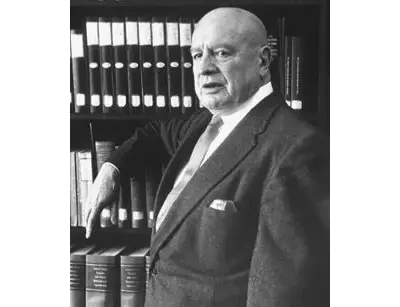
Harry Jacob Anslinger was a United States government official who served as the first commissioner of the U.S. Treasury Department's Federal Bureau of Narcotics during the presidencies of Hoover, Roosevelt, Truman, Eisenhower, and Kennedy. He was a supporter of Prohibition, and of the criminalization of drugs, and spearheaded anti-drug policy campaigns. Anslinger held office as commissioner for an unprecedented 32 years, until 1962. He then held office for two years as U.S. Representative to the United Nations Narcotics Commission. The responsibilities once held by Anslinger are now largely under the jurisdiction of the U.S. Office of National Drug Control Policy.
