Richard Nixon Quotes
The problem of marijuana has assumed the dimensions of a national emergency.
Marijuana was and still is a health and social problem in that people who tend to use it---especially young people---tend not to focus on their friendships, their work and study obligations, their own development and welfare. However it is nowhere near the degree of deleterious problems of alcohol and other drugs like heroin, cocaine, and methamphetamine. There is no record of anyone dying from an over dose or marijuana while alcohol and other drugs kill hundreds if not thousands a year. But none of those health emergencies compare with the flu which each year kills over 20,000 Americans who do not get inoculations or highway crashes which kill about 50,000. Yet Nixon did not characterize these as “national emergencies.”
Richard M. Nixon, 1913-1994, 37th President of the United States (Republican, CA), Quoted in a Common Sense for Drug Policy Advertisement in The Progressive, January 2007
Sourced by: Eigen's Political and Historical Quotations

La Guardia had seen some Federal officials claim that marijuana was a very dangerous drug leading to insanity, violence and murder if used. See {624434} and {590692} . However, none of the “dangers” had been verified by science and medicine/ La Guardia was the first public official who asked scientists to study the substance and let people know the real danger if any. The report was a major contracdiction to the federal propaganda that had been issued, and even continued to be after this study by the prestigious New York Academy of Medicine. It has been known for a long time that marijuana was relatively harmless when compared with other drugs such as heroin, cocaine, alcohol and tobacco. At the time the government officials had lied to the public grossly exaggerating the negative effects of marijuana. And scientific research was prohibited in most cases until the 21st century. And the evidence is now available that while marijuana does not have the very dangerous effect that was claimed, it is not benign either. Marijuana has an effect on the brain—especially of youth who are still developing—that is not totally understood. And there is a definite negative relationship between the extent of marihuana smoking student grades. Also we know now that marijuana impedes social development as well as intellectual. The causality is not clearly established however. It is possible that the poorer students and those less socially skilled have little success and use marijuana. With the exception of many adults who claim that marihuana helps them tolerate cancer drugs and other pain, there is no other benefit that has been found. Youngsters can think they are “cool” but that is about it on the plus side. On the negative side, marijuana is not the most dangerous drug one can take, but it is certainly not harmless.

This was a great surprise to most conservatives who assumed that Robertson, a major conservative leader and ordained minister would be opposed to drug legalization.

The "Formula" was to legalize all drugs, This would break the Drug Cartels and the power they held in Mexico, The money that could be saved from the failing drug law enforcement could be spsent on substance abuse prevention and treatment. He also felt that government should not intude on personal life style and health decisions. He was particularly intent on legalizing marijuana which unlike alcohol and other illicit drugs does not cause death.


President Barack Obama had the week before, made a speech observing the fact that marijuana was less dangerous then alcohol.


British merchants and the East India Company made huge profits from the drug trade buying opium in India and selling it to China where it had become immensely popular. But when the Chinese (led by Lin Zexu) tried to ban the import of opium, the British fought two wars with China to force the reopening of the opium trade. At the end of the 20th century, some referred to England and the English Crown as the largest Drug Cartel in history.
Cixi had issued a 10 point edict designed to end opium use in China. One of its most interesting elements was that it only applied to Chinese under the age of 60. She recognized that for those elderly people who are thoroughly addicted to opium, prohibition would be to radical a change and their life expectancy was not very long. At the time, the average lifespan of Chinese was under 50.


The prestigious commission had been appointed in 1939 and had studied the problem for 5 years. The findings refuted many of the claims that had been made by the Federal Bureau of Narcotics.

Hearst personally wrote all the anti-drug editorials of his newspapers.


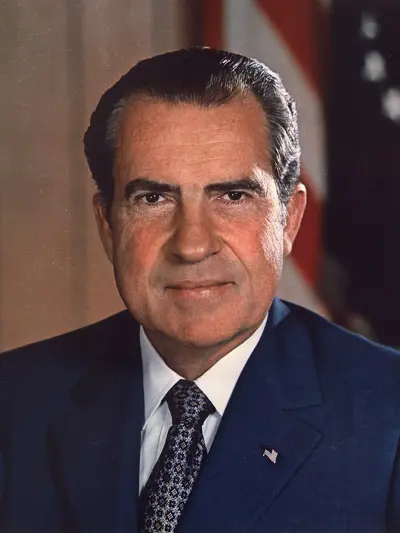
- Born: January 9, 1913
- Died: April 22, 1994
- Nationality: American
- Profession: President
Richard Milhous Nixon was the 37th president of the United States, serving from 1969 to 1974. A member of the Republican Party, Nixon previously served as the 36th vice president from 1953 to 1961, having risen to national prominence as a representative and senator from California. After five years in the White House that saw the conclusion to the U.S. involvement in the Vietnam War, détente with the Soviet Union and China, and the establishment of the Environmental Protection Agency, he became the only president to resign from the office, following the Watergate scandal.
