John Locke Quotes
He that makes use of another's fancy or necessity to sell ribbons or cloth dearer to him than to another man at the same time, cheats him.
Locke, John. "Venditio." Political Essays, edited by Mark Goldie, Cambridge University Press, 1997, p. 341.


This Hadith together with the Prophet’s probation on interest appears to preclude a capitalistic economic structure. However, Muslim institutions have been very creative in interpreting these admonitions. Some Muslims give this a modern interpretation which prohibits price gouging but not fair profit. Regardless, it has always been interpreted to apply only to business transactions between Muslims. Profit can be made on trading and commerce with non-Muslims, and Muslim traders have always spanned the globe.


Even today, the ethics of the business world are much looser than ethics of most other areas. He was considered one of the 7 Great Greek Sages, although he was not Greek by birth.


These appear to be the first economic regulations of New England. Note that although there was a Governor of the Colony, such economic issues were considered to be fundamentally religious in nature. Therefore Cotton—the leading cleric of the colony—was called upon to in effect legislate on the subject. Ironically, this is not terribly different from the theocracy in Iran or some other Muslim countries of today where like some of the early American Colonies, there was no separation of church and state.

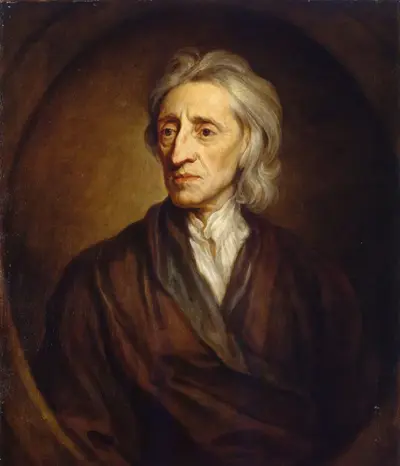
John Locke FRS was an English philosopher and physician, widely regarded as one of the most influential of Enlightenment thinkers and commonly known as the "Father of Liberalism". Considered one of the first of the British empiricists, following the tradition of Sir Francis Bacon, Locke is equally important to social contract theory. His work greatly affected the development of epistemology and political philosophy. His writings influenced Voltaire and Jean-Jacques Rousseau, and many Scottish Enlightenment thinkers, as well as the American Revolutionaries. His contributions to classical republicanism and liberal theory are reflected in the United States Declaration of Independence.
