Lucy Stone Quotes
Half a century ago women were at an infinite disadvantage in regard to their occupations. The idea that their sphere was at home, and only at home, was like a band of steel on society.
This was her last public speech.
Lucy Stone, 1818-1893, Founder, National American Woman Suffrage Association, Founder, Women's Journal, Speech to the Congress of Women, The Progress of Fifty Years, World’s Fair, 1893
Sourced by: Eigen's Political and Historical Quotations


She was the First Lady, who in many ways was also one of the nation’s leading feminists. Betty Ford, Barbara Bush, and Hillary Clinton were also First Ladies who supported key feminist position but ER was 30 years ahead of them—a time when conservatives and sexists viewed her as a dangerous radical. For example, see {585211}.


Samuel Langhorne Clemens, 1835-1910. This is an excellent example of political sarcasm. Read literally, this quotation indicates that he was opposed to women’s suffrage, and was a fairly extreme sexist. What he was doing however, is stating publicly the argument that many men made at the time—especially those who were not highly literate or well-educated. By stating the argument of the opposition, he allows fair minded people to be exposed to views that they might otherwise not be exposed to. Many sexist men at the time read the quotation and, not appreciating Twain’s sarcasm, concluded that Twain, unlike most of the “egghead intellectuals” of the day was an opponent of the increasingly militant feminists. In actuality, Mark Twain was a strong feminist. See {630191}, {630192}, & {630193}.

Nixon did however make some minor appointments of females. One irony of this statement is of all the Presidents in American history, he was probably the most erratic and emotional.


Vladimir Lenin


Puglia was an anti feminist. The stoa was the city square where men commonly congregated and discussed politicis.


He gave a litany of ills that have occurred when women had been educated. He did not provide any of the counter examples.

This was her last public speech. In general, when women would speak in public, they would be ridiculed and castigated by the press which reflected a macho cultural view that women should be seen and not heard,


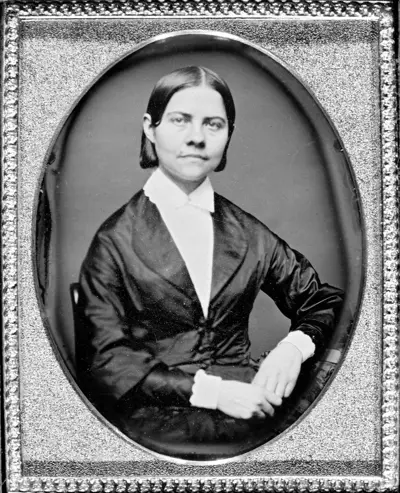
Lucy Stone was a prominent U.S. orator, abolitionist, and suffragist, and a vocal advocate and organizer promoting rights for women. In 1847, Stone became the first woman from Massachusetts to earn a college degree. She spoke out for women's rights and against slavery. Stone was known for using her birth name after marriage, the custom being for women to take their husband's surname.
