Lucy Stone Quotes
The press, many-tongued, surpassed itself in reproaches upon these women who had so far departed from their sphere as to speak in public.
This was her last public speech. In general, when women would speak in public, they would be ridiculed and castigated by the press which reflected a macho cultural view that women should be seen and not heard,
Lucy Stone, 1818-1893, Founder, National American Woman Suffrage Association, Founder, Women's Journal, Speech to the Congress of Women, The Progress of Fifty Years, World’s Fair, 1893
Sourced by: Eigen's Political and Historical Quotations


Puglia was an anti feminist. The stoa was the city square where men commonly congregated and discussed politicis.


Although she was living proof of a woman’s ability to accomplish what most men could not, she was always publicly differential to men and their sexism. Although she opposed women voting in Parliamentary elections, she did believe that women should vote in local elections where the understood the issues much better.

First female presidential candidate & first divorcee to run for that office


She is vehemently opposed to allowing women to serve in the armed forces.

Despite this pronouncement which kept Caliphs from being female, modern Islamic states (Pakistan, Indonesia) have had female Presidents.


Many politicians in that day would campaign from large carts drawn by oxen – a predecessor to the bandwagon of sorts. She was 1 of the 4 women who entered Oberlin College in 1837 thus becoming the first co-educational institution of higher education in the United States.

He served a jail sentence in Britain for inciting race hatred.

This observation has never been really taken seriously until the women’s movement stimulated historical and sociological studies to test such a hypothesis. More and more people are finding that Tocqueville may have been right on this point albeit still not a majority of scholarly opinion.

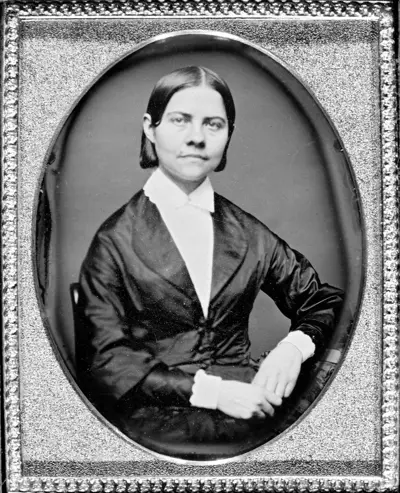
Lucy Stone was a prominent U.S. orator, abolitionist, and suffragist, and a vocal advocate and organizer promoting rights for women. In 1847, Stone became the first woman from Massachusetts to earn a college degree. She spoke out for women's rights and against slavery. Stone was known for using her birth name after marriage, the custom being for women to take their husband's surname.
