Samuel Hopkins Quotes
Furthermore, the slaves cannot be put into a more wretched situation, ourselves being judges, and the community cannot take a more lively step to escape ruin, and obtain the smiles and protection of Heaven.


He is often referred to as “of Lahore.” He was a much better theologian than a historian. His credit of Islam with the principles that would end slavery, ignored the fact that just as American founding fathers espoused equality and freedom yet some owned slaves, likewise Mohammed, the founder of Islam, was a slaveholder. Historically, long after most of the world had abolished slavery, it still existed in the Islamic nations. They were forced out of the African slave trade by the European powers in the 19th century. But slavery was legal in Saudi Arabia as late as the 1960s. Slavery was still practiced in Sudan in 2005 with Muslims attacking Christians and Animists and taking them as slaves despite the official laws banning such practices. The government itself aided the slavers. Also, although Islam is credited with a major assault on slavery, it was not slavery per se that Muhammad banned. It was the slavery of another Muslim. Sharia and the Koran allows slavery so long as the slave is an unbeliever.

Even before we had a Constitution there was major opposition to slavery. The “price” of the American Union was the acceptance of the slavery of the South. But the hypocrisy of a country based on liberty to allow and enforce slavery was not lost on the founding fathers. Ironically the abolitionists among the founding fathers were certain that they could persuade the Southern slaveholders of the error of slavery in a few years and things would be set right in the land. Even George Washington {630626}, and Thomas Jefferson and some other slaveowners at the time wished to see its abolition. Slaveholding Southern Founding Fathers in general were so wary of the abolitionists that they achieved structural, disproportionate, power in the new Constitution to ward off the abolitionists attempts to reform slavery.

This fear was great among many who were abolitionists as potentially there might be mass slaughter of all Southern whites.

Our Founding Fathers were divided into three general views about slavery. There were abolitionists for whom slavery was abominable and should be eliminated—these were mostly in the Northern States but with a few Southerners. Then there was the opposite view held by most Southerners, that slavery was not only a natural and moral institution but it was an economic and social necessity. Last were those like Laurens, George Washington and Thomas Jefferson. Slave owners who grew up with slavery as a norm but came to see its evils and the complexity of change and reform in that area.


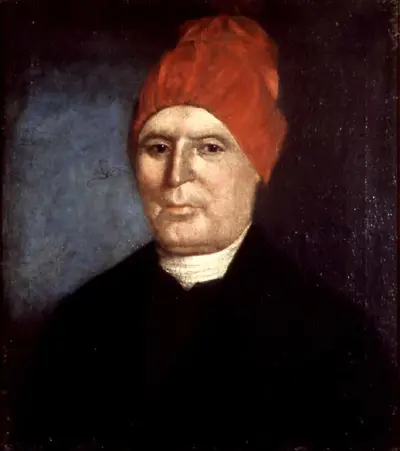
Samuel Hopkins was an American Congregationalist theologian of the late colonial era of the United States. Hopkinsian theology was named for him. Hopkins was an early abolitionist, saying that it was in the interest and duty of the U.S. to set free all of their slaves.
