William Cullen Bryant Quotes
Can anything be imagined more abhorrent to every sentiment of generosity and justice, than the law which arms the rich with the legal right to fix, by assize, the wages of the poor? If this is not slavery, we have forgotten its definition. Strike the right of associating for the sale of labor from the privileges of a freeman, and you may as well bind him to a master, or ascribe him to the soil.
Bryant, William Cullen. Prose Writings of William Cullen Bryant. Edited by Parke Godwin, vol. 2, D. Appleton and Company, 1884, p. 384.


At the time, it did seem impossible that labor and capital would ever have harmonious relations. But the notion that slavery would solve the problem is as preposterous as anything ever entered into the American political dialogue. But there were many in the South, and some in the North, who actually believed it. Even 150 years later, while labor and capital relations were much better than pre Civil War, they still could not be described as “harmonious” or “friendly”.


Although English, Cobett spent time in America and published a newspaper, The Porcupine Gazette, in Philadelphia. We was very conservative but on the issue of slavery his resembled a liberal point of view. He never used sugar, coffee, or rum because slave labor produced them. However, he advocated legally enslaving lazy people, blacks and whites, who would not work.


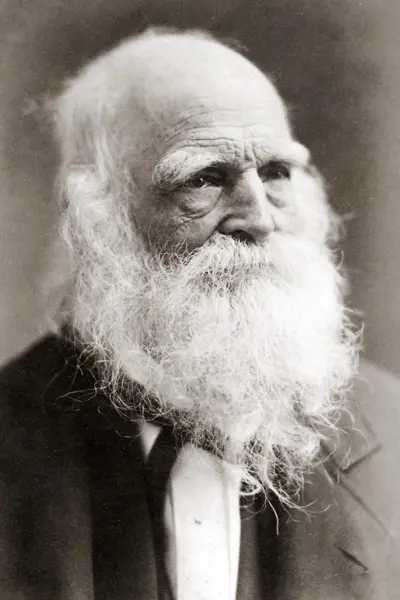
William Cullen Bryant was an American romantic poet, journalist, and long-time editor of the New York Evening Post. Born in Massachusetts, he started his career as a lawyer but showed an interest in poetry early in his life. He soon relocated to New York and took up work as an editor at various newspapers. He became one of the most significant poets in early literary America and has been grouped among the fireside poets for his accessible, popular poetry.
