Tariq Ali Quotes
Fox Televison News is reaching Third Reich standards of media coverage of world affairs.
Fox News was the first major television news channel in the United States to represent a partisan political position—in this case Republican conservative. Although this was a first for TV, in American history most newspapers were openly partisan until the latter half of the 20th century. The Third Reich reference was to Nazi Germany which had extremely partisan media control of German media of the day.
Tariq Ali, Pakistani Writer & Editor, New Left Review, Elberg Lecture at the University of California at Berkeley, 2004
Sourced by: Eigen's Political and Historical Quotations


Ailes suggested plan was not implemented by President Nixon. However. Ailes, an arch conservative who has always believed the media was biased against conservatism, later implemented his idea very successfully. This idea was the intellectual forerunner" to Fox News, which Ailes launched as a "fair and balanced" news network in 1996. The Nixon Administration however, concerned about the extremes of many of his recommendations finally fired him, which turned out to be very positive for Ailes career thereafter.

Catledge came to California to cover the gubernatorial race between incumbent Republican Governor Merriam and writer Upton Sinclair, an avowed socialist who was running neck and neck. Palmer was then the Political Editor of the Los Angeles Times and his newspaper never covered anything Sinclair did for the campaign and only covered Merriam. Catledge observed that this was not only unfair but poor journalism.

Until the 20th century almost all American political media were shamelessly and overtly biased—left or right. Political Parties had their own de facto publications much like Fox News became for the Republicans in the 21st century. In the 20th century journalism developed into a profession that evolved standards of objectivity in reporting. That norm then prevailed for about 70 years. With the extreme polarization of the later years of the 29th Century the right wing began to accuse much of the media of a left wing bias, and the media tended to react as Krugman describes in this quotation. The model of having spokespersons for “each side” of an issue works for highly subjective political preferences with a two party system, but where it broke down is with scientific and technical issues. On these, there often really are not two scientific points of view, but there is a scientific consensus of the vast majority of scientists and almost all the prestigious and accomplished scientists are in accord. However, there may be some who have a cultural, religious and/or political concern for some science and its implications for society. They in turn find a scientist or two, often one who is unaccomplished and not recognized in the scientific field to argue a different point of view. The media have tended to equate the two and have a “debate” as if there were two sides to the science when there are not. These issues tend to cluster around scientific medical issues involving sex and birth control methods, environment and conservation, evolution, the age of the earth and the method of creation of the universe. The problem is particularly exacerbated by the general scientific illiteracy of the American population and the relatively few journalists who themselves are scientifically literate who can explain scientific issues well.

Vladimir Lenin. Lenin was echoing criticisms that were made the world over and even by some in the United States. However, his solution to have the press controlled by the ruling party just changed the cast of characters who were propagandizing and distorting the truth. Lenin was not able to offer a better solution nor were others. However, with enough affluence the capitalist society produced enough different publishers all competing that one did not dominate public opinion. With technology of TV and the Internet, the bar to entry is so small that almost anyone can be a publisher and find an interested market. In a way technology has solved much of the problem for capitalistic and totalitarian societies alike. In the latter, even censorship is not easy or feasible on a large scale.


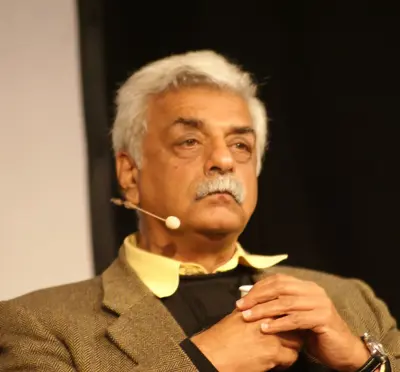
Tariq Ali is a British political activist, writer, journalist, historian, filmmaker, and public intellectual. He is a member of the editorial committee of the New Left Review and Sin Permiso, and contributes to The Guardian, CounterPunch, and the London Review of Books. He read Philosophy, Politics, and Economics at Exeter College, Oxford.
